Clay-Loving Buckwheat: Colorado’s Rare Treasure You Should Admire (But Not Grow)
If you’ve stumbled across the name clay-loving buckwheat in your native plant research, you’ve discovered one of Colorado’s most extraordinary botanical rarities. This tiny perennial, known scientifically as Eriogonum pelinophilum, is a plant so specialized and endangered that it’s more of a conservation marvel than a garden candidate.
What Makes Clay-Loving Buckwheat So Special?
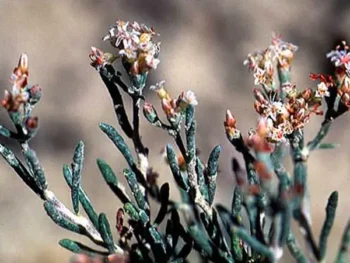
Clay-loving buckwheat is a compact perennial herb that forms attractive cushion-like mats close to the ground. Despite its diminutive size, this little powerhouse produces clusters of small, creamy white flowers that create a delicate display against its gray-green, woolly leaves. As a member of the buckwheat family, it shares the characteristic small, clustered flowers that many gardeners love about its more common cousins.
But here’s where this plant gets really interesting – and why you probably shouldn’t try to grow it in your backyard.
An Endangered Colorado Endemic
Clay-loving buckwheat is found in exactly one place on Earth: the clay soils of Colorado’s Piceance Basin in the northwestern part of the state. This makes it what botanists call an endemic species – one that exists nowhere else naturally.
- Species observed
- No observations
Unfortunately, this remarkable plant is also endangered. With a Global Conservation Status of S2 (Imperiled) and listed as Endangered in the United States, clay-loving buckwheat faces serious threats to its survival. Only 6 to 20 populations exist, with an estimated 1,000 to 3,000 individual plants remaining in the wild.
Why This Isn’t Your Average Garden Plant
Even if clay-loving buckwheat weren’t endangered, it would be nearly impossible to grow successfully in a typical garden setting. This plant has evolved to thrive in very specific conditions that are extremely difficult to replicate:
- Specialized clay soils found only in its native Colorado habitat
- Extremely arid conditions with minimal water
- Full sun exposure
- Perfect drainage despite clay soil
- Specific elevation and climate conditions
These requirements are so precise that even experienced native plant growers would struggle to keep this species alive outside its natural home.
The Conservation Message
Given its endangered status and incredibly specific growing requirements, clay-loving buckwheat is a plant to admire and protect rather than cultivate. If you’re interested in supporting this species, consider:
- Supporting organizations that work to protect Colorado’s native habitats
- Learning about and advocating for conservation of the Piceance Basin
- Choosing other native buckwheat species for your garden that aren’t threatened
Better Buckwheat Alternatives for Your Garden
If you’re drawn to the charm of native buckwheat plants, there are several other Eriogonum species that are better suited to cultivation and not threatened with extinction. Consider these alternatives:
- Sulfur flower buckwheat (Eriogonum umbellatum) – hardy and showy
- Wild buckwheat (Eriogonum fasciculatum) – drought-tolerant and pollinator-friendly
- Desert trumpet (Eriogonum inflatum) – unique architectural form
These species offer similar aesthetic appeal and ecological benefits while being much more appropriate for home cultivation.
Appreciating Rarity in Nature
Clay-loving buckwheat serves as a powerful reminder of how specialized and fragile some plant communities can be. Its existence in just one small area of Colorado highlights the importance of protecting unique habitats and the incredible diversity that can evolve in very specific environmental niches.
While we can’t – and shouldn’t – try to grow this endangered beauty in our gardens, we can appreciate its remarkable adaptation to its clay soil home and support efforts to ensure it continues to thrive in the wild for future generations to discover and admire.
Sometimes the best way to love a plant is to let it be exactly where it belongs – and for clay-loving buckwheat, that’s in the unique clay soils of Colorado’s Piceance Basin, where it has carved out its own irreplaceable niche in the natural world.