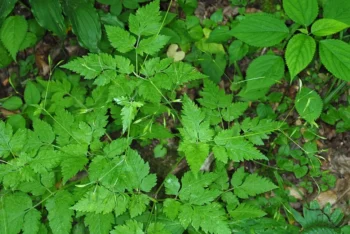
Clayton’s Sweetroot: A Fragrant Native Gem for Shade Gardens
If you’re looking to add a touch of woodland magic to your shade garden, meet Clayton’s sweetroot (Osmorhiza claytonii) – a delightfully fragrant native wildflower that’s been quietly charming gardeners across North America. This unassuming perennial might not win any flashy flower contests, but it brings something special to the table: leaves that smell like licorice when you brush against them!
What Makes Clayton’s Sweetroot Special?
Clayton’s sweetroot is a native North American perennial that belongs to the carrot family. As a forb (basically a fancy term for a non-woody flowering plant), it grows as a herbaceous perennial that dies back to the ground each winter and returns fresh each spring. You might occasionally see it listed under its old scientific names like Washingtonia claytonii, but Osmorhiza claytonii is the current accepted name.
Where Does It Call Home?
This native beauty has quite an impressive range! Clayton’s sweetroot naturally grows throughout much of eastern North America, calling home to areas from southeastern Canada down to the southeastern United States. You can find it thriving in states from Maine to Georgia and as far west as the Great Plains, including Alabama, Arkansas, Connecticut, Delaware, Georgia, Illinois, Indiana, Iowa, Kansas, Kentucky, Maine, Maryland, Massachusetts, Michigan, Minnesota, Missouri, Nebraska, New Hampshire, New Jersey, New York, North Carolina, North Dakota, Ohio, Pennsylvania, Rhode Island, South Carolina, South Dakota, Tennessee, Vermont, Virginia, West Virginia, and Wisconsin, plus several Canadian provinces.
- Species observed
- No observations
Note for Arkansas gardeners: Clayton’s sweetroot has a rarity status of S1S3 in Arkansas, meaning it’s uncommon to rare in the state. If you’re in Arkansas and want to grow this plant, please source it responsibly from reputable native plant nurseries rather than collecting from wild populations.
The Garden Appeal
Let’s be honest – Clayton’s sweetroot won’t stop traffic with showy blooms. Instead, it offers subtle woodland charm with small white flowers arranged in delicate umbrella-shaped clusters that appear in late spring. The real star of the show is the foliage: compound leaves that release a pleasant anise or licorice-like fragrance when brushed or crushed. It’s like having a natural air freshener in your garden!
Perfect Garden Roles
Clayton’s sweetroot excels in several garden situations:
- Woodland gardens: Perfect understory companion for native trees and shrubs
- Shade gardens: Thrives in areas where sun-loving plants struggle
- Native plant gardens: Authentic choice for indigenous plantings
- Naturalized areas: Great for low-maintenance, natural-looking landscapes
- Restoration projects: Excellent for restoring native woodland ecosystems
Growing Conditions That Make It Happy
The good news is that Clayton’s sweetroot is pretty easygoing! Here’s what it loves:
- Light: Partial to full shade (morning sun with afternoon shade works great)
- Soil: Moist to moderately dry soils with good organic content
- Moisture: Appreciates consistent moisture but becomes quite drought tolerant once established
- Climate: Hardy in USDA zones 3-8
According to wetland classifications, Clayton’s sweetroot is considered facultative upland across most regions, meaning it usually prefers non-wetland conditions but can tolerate occasional wet periods. This makes it quite versatile for different garden moisture levels.
Planting and Care Tips
Here’s the scoop on successfully growing Clayton’s sweetroot:
- Starting from seed: This is the most common propagation method. Seeds benefit from cold stratification, so fall planting works well
- Self-seeding: Once established, plants often self-sow, creating natural colonies over time
- Maintenance: Requires minimal care once established – just occasional watering during dry spells
- Companion planting: Pairs beautifully with other native woodland plants like wild ginger, bloodroot, and native ferns
Wildlife and Pollinator Benefits
While Clayton’s sweetroot might look unassuming, those small white flower clusters are actually quite attractive to pollinators! The blooms draw in various small pollinators including flies, small native bees, and beetles. It’s a great example of how native plants support local ecosystems in ways that aren’t always immediately obvious.
Should You Plant Clayton’s Sweetroot?
If you have a shaded area in your garden and appreciate plants with subtle charm and ecological value, Clayton’s sweetroot could be a wonderful addition. It’s particularly perfect for gardeners who:
- Want low-maintenance native plants
- Enjoy fragrant foliage
- Are creating woodland or naturalized gardens
- Want to support local pollinators with native blooms
- Appreciate plants with historical and cultural significance
While it may not be the showstopper of your garden, Clayton’s sweetroot offers that special combination of native heritage, ecological benefits, and sensory appeal that makes it a treasured addition to shade gardens across its native range. Plus, there’s something delightfully old-fashioned about having a plant that smells like licorice growing in your woodland garden!