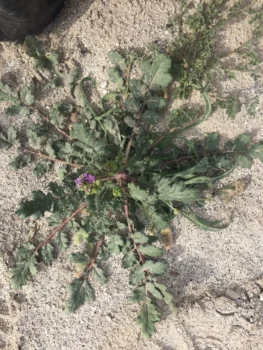
Cleftleaf Wildheliotrope: A Desert Gem for Water-Wise Gardens
If you’re looking to add a splash of delicate beauty to your drought-tolerant garden while supporting local wildlife, cleftleaf wildheliotrope might just be the perfect addition. This charming native annual brings both ecological value and understated elegance to southwestern landscapes.
Meet the Cleftleaf Wildheliotrope
Cleftleaf wildheliotrope (Phacelia crenulata var. minutiflora) is a native annual forb that calls the American Southwest home. You might also find it listed under its synonyms Phacelia ambigua var. minutiflora or Phacelia minutiflora in older references. As a member of the borage family, this little wildflower packs a big punch when it comes to supporting local ecosystems.
Where Does It Grow?
This desert native thrives naturally across Arizona, California, and Utah, making it perfectly adapted to the challenging conditions of the southwestern United States. It’s right at home in the Sonoran, Mojave, and Great Basin desert regions, where it has evolved to make the most of scarce rainfall and intense sun.
- Species observed
- No observations
Why Choose Cleftleaf Wildheliotrope?
There are several compelling reasons to consider this native beauty for your garden:
- Pollinator magnet: The small blue to purple flowers arranged in distinctive coiled clusters attract bees, butterflies, and other beneficial insects
- Water-wise: As a desert native, it requires minimal irrigation once established
- True native: Supporting local ecosystems by choosing plants that naturally belong in your region
- Unique texture: The deeply lobed, somewhat fuzzy leaves add interesting texture to garden compositions
- Easy-going: As an annual, it completes its life cycle quickly and often self-seeds for next year
Perfect Garden Settings
Cleftleaf wildheliotrope shines in several garden styles:
- Desert and xeriscape gardens
- Rock gardens and naturalized areas
- Native plant gardens
- Pollinator gardens
- Low-maintenance landscapes
This forb works beautifully as part of mixed wildflower displays or as a delicate accent among larger desert shrubs and cacti.
Growing Conditions and Care
Success with cleftleaf wildheliotrope comes from mimicking its natural desert habitat:
- Sunlight: Full sun is essential
- Soil: Well-draining sandy or rocky soil; heavy clay soils should be avoided
- Water: Drought tolerant once established; actually prefers dry conditions
- Climate: Best suited for USDA hardiness zones 8-10
Planting and Care Tips
Getting started with cleftleaf wildheliotrope is refreshingly simple:
- Timing: Direct seed in fall or early spring when temperatures are cooler
- Seeding: Scatter seeds on prepared soil surface and rake lightly
- Watering: Provide light watering until germination, then reduce frequency
- Maintenance: Minimal care needed; avoid overwatering and over-fertilizing
- Self-seeding: Allow some plants to go to seed for natural propagation
Supporting Local Wildlife
Beyond its garden appeal, cleftleaf wildheliotrope serves as an important food source for native pollinators. The flowers provide nectar and pollen for bees and butterflies, while the seeds may attract small birds. By choosing native plants like this one, you’re creating habitat and supporting the intricate web of life that makes desert ecosystems so resilient.
Is Cleftleaf Wildheliotrope Right for You?
This native annual is an excellent choice if you’re gardening in the Southwest and want a low-maintenance, ecologically beneficial plant that celebrates your region’s natural beauty. However, gardeners in cooler, wetter climates may find it challenging to grow successfully, as it’s specifically adapted to arid conditions.
For those outside its native range, consider exploring native wildflowers from your own region that offer similar benefits to local wildlife and require less effort to maintain.