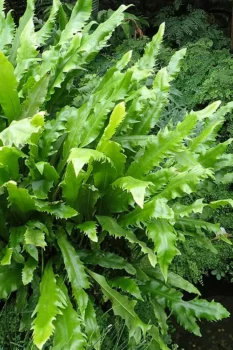
Climbing Birdsnest Fern: A Tropical Beauty for Your Garden
Meet the climbing birdsnest fern, a stunning tropical fern that’s sure to add a touch of lush, jungle-like beauty to your space! Also known by its less flattering name pitted wart fern (don’t let that put you off!), this remarkable plant has a personality all its own.
What Makes This Fern Special?
The climbing birdsnest fern (Microsorum punctatum) is a perennial epiphytic fern native to the Pacific Basin. Unlike your typical ground-hugging ferns, this adventurous species loves to climb and cascade, making it a fantastic choice for adding vertical interest to your garden or indoor space.
This fern sports glossy, leathery fronds that can either climb up surfaces or gracefully drape down, depending on how you choose to display it. The punctatum in its scientific name refers to the distinctive spotted pattern on the undersides of its fronds – a key identifying feature that gives it character.
Where Does It Call Home?
This tropical beauty is native to Pacific island regions, with confirmed populations in Guam and Palau, though its range likely extends to other Pacific islands as well. In its natural habitat, you’ll find it climbing trees in humid, shaded forest environments.
- Species observed
- No observations
Why Consider Growing Climbing Birdsnest Fern?
Here are some compelling reasons this fern might be perfect for your space:
- Unique growth habit: Unlike most ferns, it can climb or cascade, offering versatility in placement
- Low maintenance: Once established, it’s relatively easy to care for
- Indoor/outdoor flexibility: Works beautifully as a houseplant or in tropical outdoor settings
- Year-round appeal: As a perennial, it provides consistent green beauty
- Conversation starter: Its unusual climbing habit and spotted undersides make it a unique addition
Growing Conditions and Care
This tropical fern thrives in USDA hardiness zones 10-12, making it perfect for:
- Tropical and subtropical outdoor gardens
- Greenhouse cultivation
- Indoor houseplant collections
- Shaded lanai or patio areas in warm climates
Ideal growing conditions include:
- Bright, indirect light or partial shade
- High humidity (60% or higher)
- Well-draining but consistently moist growing medium
- Warm temperatures (65-80°F)
Planting and Care Tips
For the best success with your climbing birdsnest fern:
- Mounting: Consider mounting it on a tree trunk, cork board, or moss pole to showcase its climbing nature
- Soil: Use a well-draining, organic-rich potting mix or orchid bark mix
- Watering: Keep consistently moist but never waterlogged
- Humidity: Mist regularly or use a humidity tray, especially indoors
- Fertilizing: Feed monthly with diluted liquid fertilizer during growing season
Garden Design Applications
The climbing birdsnest fern works wonderfully in:
- Tropical themed gardens as an understory plant
- Shade gardens where it can climb trees or structures
- Container gardens on patios or decks
- Indoor plant collections as a statement piece
- Bathroom or kitchen spaces where humidity is naturally higher
Things to Keep in Mind
While this fern doesn’t provide direct benefits to pollinators (ferns don’t flower), it does contribute to the overall ecosystem by providing habitat structure and contributing to the lush, layered environment that many creatures appreciate.
If you’re gardening outside its native range, this fern makes an excellent non-invasive addition to your plant collection. However, if you’re looking to support local ecosystems, consider pairing it with native plants from your region.
The Bottom Line
The climbing birdsnest fern is a delightful choice for gardeners looking to add tropical flair and unique texture to their spaces. Whether you’re creating an indoor jungle or designing a shaded tropical garden, this adaptable fern brings both beauty and character. Just remember to keep it warm, humid, and happy – and it’ll reward you with years of lush, climbing greenery!