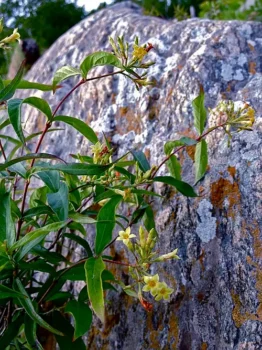
Climbing Dogbane: A Native Vine That’s Actually Worth Climbing For
If you’re looking for a native climbing plant that won’t take over your entire neighborhood (we’re looking at you, invasive vines), let me introduce you to climbing dogbane. This delightful native vine has been quietly doing its thing across the southeastern United States for ages, and it’s about time more gardeners discovered its charms.
What Exactly Is Climbing Dogbane?
Climbing dogbane (Trachelospermum difforme) is a perennial native vine that’s perfectly content to twist and climb its way through your garden without causing drama. As a twining climber, it uses its relatively long stems—which can be either woody or herbaceous—to gracefully wind around whatever support you provide.
This native beauty calls the lower 48 states home, specifically thriving in Alabama, Arkansas, Delaware, District of Columbia, Florida, Georgia, Illinois, Indiana, Kentucky, Louisiana, Maryland, Mississippi, Missouri, North Carolina, Oklahoma, South Carolina, Tennessee, Texas, and Virginia. That’s quite an impressive native range!
- Species observed
- No observations
Why Your Garden Will Thank You for Planting It
Here’s where climbing dogbane really shines—it’s the kind of plant that gives back more than it takes. In spring, you’ll be treated to clusters of small, fragrant white flowers that smell absolutely divine. The glossy green leaves provide beautiful texture throughout the growing season, and many gardeners are delighted to discover they often turn lovely shades of red in fall.
But the real magic happens when the pollinators arrive. Those sweet-smelling flowers are like a dinner bell for native bees, butterflies, and other beneficial insects. You’ll be supporting your local ecosystem while enjoying a gorgeous vine—talk about a win-win!
Where Does Climbing Dogbane Feel at Home?
This adaptable native is classified as a facultative wetland plant across multiple regions, which means it usually hangs out in wetlands but won’t turn up its nose at drier spots either. This flexibility makes it perfect for:
- Woodland gardens where it can climb through trees naturally
- Wetland margins and rain gardens
- Naturalized areas where you want that wild look
- Covering fences, arbors, or trellises
- Erosion control on slopes (those spreading rhizomes are surprisingly helpful)
- Native plant gardens focused on supporting local wildlife
Growing Conditions That Make It Happy
The beauty of native plants like climbing dogbane is that they’re generally low-maintenance once they settle in. This vine is hardy in USDA zones 6-9, so it can handle a good range of climates.
For the best results, give your climbing dogbane:
- Partial shade to full sun (it’s quite adaptable)
- Moist to wet soils (remember, it loves wetlands)
- Consistent moisture, especially during establishment
- Various soil types—it’s not particularly picky
Planting and Care Tips
Here’s the best news: climbing dogbane is refreshingly easy to care for. When you first plant it, you might want to provide some initial support structure to help it get started, but once established, it’ll pretty much take care of itself.
Keep in mind that this vine can spread via underground rhizomes, so it might pop up in nearby spots—think of it as nature’s way of saying thank you by giving you more plants! If you need to keep it contained, simply remove any unwanted shoots.
The only pruning you might need to do is some light cleanup in late winter if the vine gets a bit unruly, but honestly, most gardeners find its natural growth habit quite attractive.
The Bottom Line
Climbing dogbane is one of those native gems that deserves more recognition. It provides beautiful flowers, supports pollinators, handles various growing conditions with grace, and won’t cause you landscaping nightmares down the road. Whether you’re creating a wildlife garden, naturalizing a woodland area, or just want a well-behaved native vine for your trellis, climbing dogbane is definitely worth considering.
Plus, there’s something deeply satisfying about growing a plant that’s been thriving in your region for centuries. Your local wildlife already knows and loves it—maybe it’s time you got acquainted too!