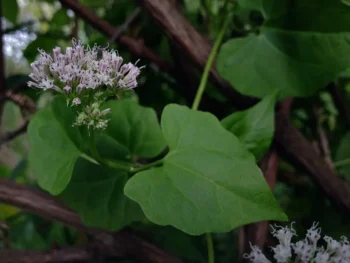
Climbing Hempvine: A Native Vine with Serious Climbing Ambitions
If you’re looking for a native plant that knows how to make a statement, meet climbing hempvine (Mikania scandens). This enthusiastic climber might just be the most determined plant in your garden – and that’s both its charm and its challenge.
What Exactly Is Climbing Hempvine?
Climbing hempvine is a perennial herbaceous vine native to much of the eastern United States. Don’t let the hemp in its name fool you – this plant is actually a member of the aster family and gets its name from its strong, fibrous stems that were once used for cordage. You might also see it listed under various scientific synonyms, including Mikania angulosa or Willoughbya heterophylla, but they’re all referring to the same vigorous climber.
Where Does It Call Home?
This native vine has quite an impressive range, naturally occurring across 30 states from Maine down to Florida and stretching west to Texas and Oklahoma. You’ll find it thriving in Alabama, Arkansas, Connecticut, Delaware, Florida, Georgia, Illinois, Indiana, Kentucky, Louisiana, Maine, Maryland, Massachusetts, Michigan, Mississippi, Missouri, New Hampshire, New Jersey, New York, North Carolina, Ohio, Oklahoma, Pennsylvania, Rhode Island, South Carolina, Tennessee, Texas, and Virginia. It’s even made its way north to Ontario, Canada, though it’s considered non-native there.
- Species observed
- No observations
The Good, The Bold, and The Beautiful
Climbing hempvine brings several attractive qualities to the garden:
- Late-season blooms: When many other plants are winding down, this vine produces clusters of small, white flowers that practically glow in the late summer and fall landscape
- Heart-shaped leaves: The medium-textured, green foliage creates an appealing backdrop throughout the growing season
- Pollinator magnet: Those late-season flowers are incredibly valuable for butterflies, bees, and other pollinators preparing for winter
- Native credentials: Supporting local ecosystems while adding natural beauty to your landscape
- Rapid growth: This vine doesn’t mess around – it can reach mature height of about 1 foot in a single growing season, but will climb much higher given support
But Here’s the Catch…
Climbing hempvine earned its reputation as an enthusiastic grower for good reason. This vine has serious climbing ambitions and a rapid growth rate that can surprise even experienced gardeners. It’s the kind of plant that will take over your garden shed, engulf your fence, and keep going if you’re not paying attention.
Perfect Spots for This Climbing Character
Climbing hempvine shines in specific garden situations:
- Wetland and rain gardens: This plant loves moisture and is classified as obligate wetland in northern regions and facultative wetland in southern areas
- Naturalized landscapes: Perfect for wild or woodland garden areas where its vigorous nature won’t overwhelm more delicate plants
- Erosion control: Excellent for stabilizing slopes and banks, especially in moist areas
- Wildlife gardens: The late-season nectar source is invaluable for migrating butterflies
Growing Conditions That Make It Happy
Climbing hempvine is surprisingly adaptable but has definite preferences:
- Hardiness: Thrives in USDA zones 4-9, tolerating temperatures as low as -38°F
- Moisture: Prefers consistently moist to wet soils – drought tolerance is low
- Soil: Adapts to medium and fine-textured soils with pH ranging from 5.7 to 8.7
- Light: Shade tolerant, making it perfect for woodland edges and partially shaded areas
- Fertility: Medium fertility requirements – not overly demanding
Planting and Care Tips
Getting climbing hempvine established is refreshingly straightforward:
- Propagation: Easily grown from seed (which it produces abundantly) or purchased as container plants
- Planting density: Space plants 1,212 to 2,728 per acre, depending on your coverage goals
- Timing: Plant after the last frost in areas with at least 110 frost-free days
- Support: Provide sturdy structures for climbing – this vine means business
- Management: Regular pruning may be necessary to keep it within bounds
Should You Plant Climbing Hempvine?
The answer depends on your garden goals and management style. Choose climbing hempvine if you:
- Have a wetland or consistently moist garden area
- Want to support late-season pollinators
- Need erosion control for slopes or banks
- Enjoy managing vigorous plants and don’t mind regular maintenance
- Have space where an aggressive grower won’t cause problems
However, think twice if you have a small garden, prefer low-maintenance plants, or worry about plants escaping their designated areas.
The Bottom Line
Climbing hempvine is like that friend who’s incredibly enthusiastic and full of energy – wonderful in the right circumstances, but you need to know what you’re getting into. When given appropriate space and conditions, it’s a valuable native plant that provides late-season beauty and crucial pollinator resources. Just remember: with great climbing power comes great responsibility for management!
If you’re drawn to the idea of a native climbing vine but want something less aggressive, consider alternatives like American groundnut (Apios americana) or wild ginger (Asarum canadense) for groundcover situations. But if you’re ready for a plant with serious climbing ambitions and the garden space to accommodate them, climbing hempvine might just be your perfect match.