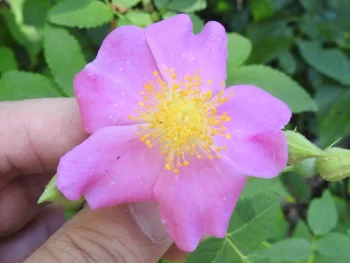
Climbing Rose: America’s Native Beauty for Your Garden
Meet Rosa setigera, commonly known as climbing rose or prairie rose – a delightful native plant that’s been gracing North American landscapes long before European roses ever arrived on the scene. This charming perennial offers all the romance of traditional roses with the added bonus of being perfectly adapted to local conditions and wildlife needs.
A True American Native
Rosa setigera is proudly native to both Canada and the lower 48 United States, making it a fantastic choice for gardeners who want to support local ecosystems. You’ll find this adaptable beauty naturally growing across an impressive range of states, from the Atlantic coast to the Great Plains.
This native rose calls home to: Alabama, Arkansas, Connecticut, Delaware, District of Columbia, Florida, Georgia, Illinois, Indiana, Iowa, Kansas, Kentucky, Louisiana, Maryland, Massachusetts, Michigan, Mississippi, Missouri, Nebraska, New Hampshire, New Jersey, New York, North Carolina, Ohio, Oklahoma, Ontario, Pennsylvania, South Carolina, Tennessee, Texas, Virginia, West Virginia, and Wisconsin.
- Species observed
- No observations
What Makes This Rose Special
Don’t let the climbing name fool you – Rosa setigera is actually more of a sprawling subshrub that typically stays under 3 feet tall, though it can reach up to 16 feet in length as it arches and trails. Think of it as nature’s way of creating a living carpet of roses!
The real show starts in spring when this rapid grower bursts into bloom with conspicuous white to pink flowers. Come summer and fall, you’ll be treated to bright red rose hips that add another layer of visual interest to your garden. The dark green, fine-textured foliage provides a lovely backdrop throughout the growing season.
Perfect for Low-Maintenance Gardens
Here’s where Rosa setigera really shines – it’s incredibly easy to grow. This drought-tolerant beauty prefers:
- Full sun (shade intolerant, so don’t tuck it away in dark corners)
- Well-draining soils (coarse to medium textures work best)
- pH between 5.0 and 7.5
- Minimal water once established
- USDA hardiness zones 4-8
With its high drought tolerance and low moisture needs, this native rose is perfect for gardeners who want beauty without the fuss of constant watering and maintenance.
Wildlife Will Thank You
As a native plant, Rosa setigera is a pollinator magnet. The simple, open flowers make it easy for bees, butterflies, and other beneficial insects to access nectar and pollen. Those attractive red rose hips aren’t just for show either – they provide food for birds and other wildlife throughout fall and winter.
The plant typically has a Facultative Upland wetland status across most regions, meaning it usually grows in non-wetland areas but can occasionally pop up in wetter spots – making it quite adaptable to various garden conditions.
How to Grow Your Own
Getting started with Rosa setigera is straightforward:
- Propagation: You can grow it from seed (about 50,000 seeds per pound!) or purchase bare root or container plants
- Planting: Spring is the ideal time, after the last frost
- Spacing: Allow plenty of room for its sprawling habit
- Care: Water until established, then let nature take over
- Pruning: Minimal pruning needed thanks to its natural growth form
One thing to note: seeds require cold stratification, so if you’re starting from seed, they’ll need a winter chill period to germinate properly in spring.
Design Ideas for Your Garden
Rosa setigera’s climbing and sprawling nature makes it incredibly versatile in the landscape:
- Let it cascade down slopes for natural erosion control
- Use as groundcover in naturalized areas
- Perfect for prairie and native plant gardens
- Excellent choice for wildlife gardens
- Can be trained up supports in cottage-style gardens
With its moderate lifespan and ability to resprout, this native rose will be a long-term addition to your garden that only gets better with age.
The Bottom Line
If you’re looking for a low-maintenance, drought-tolerant rose that supports local wildlife while providing months of beauty, Rosa setigera deserves a spot in your garden. It combines the classic appeal of roses with the practical benefits of native plants – truly the best of both worlds for modern gardeners who want to work with nature, not against it.