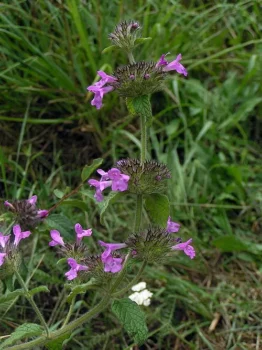
Clinopodium: A Perennial Herb Worth Understanding
If you’ve stumbled across the name clinopodium while browsing plant catalogs or wandering through botanical discussions, you might be wondering what exactly this perennial herb brings to the garden table. Let’s dive into the world of Clinopodium and explore whether this interesting plant might have a place in your landscape.
What Exactly is Clinopodium?
Clinopodium is a perennial forb herb that belongs to the fascinating world of non-woody plants. Think of it as nature’s way of creating a plant that stays low to the ground without developing the thick, woody stems you’d see on shrubs or trees. Instead, this clever plant keeps its growing points right at or below ground level, allowing it to return year after year without the fuss of developing significant woody tissue.
As a vascular plant, clinopodium has all the internal plumbing needed to transport water and nutrients efficiently, but it maintains that soft, herbaceous character that makes it quite different from its woody neighbors in the garden.
Where Does Clinopodium Call Home?
The native status of clinopodium is, well, it’s complicated! This plant has quite the geographic story. It’s considered non-native in Alaska, where it has managed to establish itself and reproduce without human help. Interestingly, it’s actually native to St. Pierre and Miquelon, those small French islands off the coast of Newfoundland. For Canada and the lower 48 United States, its native status remains undefined.
Despite this complex native status, clinopodium has made itself at home across an impressive range of locations. You can find it growing in states from Alabama to Alaska, and from Arizona to Vermont. It’s also established itself in several Canadian provinces including British Columbia, Ontario, Quebec, and the Maritime provinces.
- Species observed
- No observations
Should You Consider Clinopodium for Your Garden?
Here’s where things get interesting for gardeners. With its undefined native status in most areas and unknown invasive potential, clinopodium sits in that gray zone where the decision isn’t immediately clear-cut. The plant has shown it can establish and persist on its own, which could be either a blessing (low maintenance!) or a concern (potential spreading), depending on your gardening goals.
Since many specific details about clinopodium’s growing requirements, wildlife benefits, and garden performance aren’t well-documented, you might want to consider some well-known native alternatives that can provide similar herbaceous perennial benefits with more predictable garden behavior.
The Bottom Line for Gardeners
Clinopodium represents one of those intriguing plants that exists in the botanical world with a somewhat mysterious garden personality. While it’s clearly a survivor – evidenced by its wide distribution and ability to establish in diverse locations – the lack of detailed information about its specific growing needs, potential invasiveness, and garden performance makes it a bit of a wild card.
If you’re drawn to the idea of growing clinopodium, proceed with the same caution you’d use with any plant of uncertain garden behavior. Keep an eye on how it performs in your specific location, and be prepared to manage its growth if it proves more enthusiastic than expected.
For gardeners prioritizing native plants with well-documented benefits, you might want to explore other perennial herbs native to your specific region. Your local native plant society or extension office can point you toward fantastic alternatives that will provide the herbaceous perennial structure you’re looking for while supporting local ecosystems in proven ways.