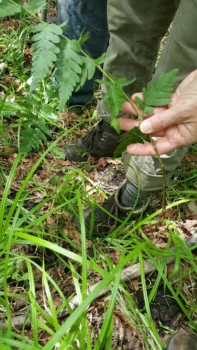
Clinton’s Woodfern: A Majestic Native Fern for Your Shade Garden
If you’re looking to add some serious woodland drama to your shade garden, meet Clinton’s woodfern (Dryopteris clintoniana). This stunning native fern brings an almost prehistoric elegance to any landscape with its large, deeply divided fronds that can make even the most ordinary shady spot feel like an enchanted forest.
What Makes Clinton’s Woodfern Special?
Clinton’s woodfern is a perennial fern native to both Canada and the United States, making it a fantastic choice for gardeners who want to support local ecosystems. This herbaceous beauty lacks woody stems but makes up for it with robust, architectural foliage that returns year after year.
You might occasionally see this fern listed under its scientific synonyms, including Dryopteris cristata var. clintoniana, but don’t let the fancy names intimidate you – it’s the same wonderful plant!
Where Does It Naturally Grow?
Clinton’s woodfern calls a impressive swath of eastern North America home. You’ll find it naturally growing across numerous states including Connecticut, Delaware, Illinois, Indiana, Maine, Maryland, Massachusetts, Michigan, New Hampshire, New Jersey, New York, Ohio, Pennsylvania, Rhode Island, Vermont, and Wisconsin. It also extends into Canadian provinces like New Brunswick, Ontario, and Quebec.
- Species observed
- No observations
A Word About Rarity
Here’s something important to know: Clinton’s woodfern has a rarity status of S3 (Highlands Listed) in New Jersey, meaning it’s uncommon in that region. If you’re considering adding this beauty to your garden, please make sure you source it responsibly from reputable nurseries rather than collecting from the wild. This helps protect wild populations while still allowing you to enjoy this magnificent fern.
Perfect for Wet and Wonderful Spaces
One of Clinton’s woodfern’s superpowers is its love of moisture. Classified as Facultative Wetland across multiple regions (Atlantic and Gulf Coastal Plain, Eastern Mountains and Piedmont, Midwest, and Northcentral & Northeast), this fern usually thrives in wetland conditions but can also adapt to drier spots. This flexibility makes it perfect for:
- Rain gardens
- Areas with poor drainage
- Streamside plantings
- Boggy spots in your yard
- Traditional woodland gardens with consistent moisture
Growing Clinton’s Woodfern Successfully
The good news is that Clinton’s woodfern isn’t particularly fussy once you understand its basic needs. Here’s how to keep it happy:
Light Conditions: This fern prefers partial to full shade. Think of it as nature’s way of saying no sunbathing allowed! It’s perfectly content living under the canopy of larger trees or on the north side of your house.
Soil Needs: Rich, organic soil that stays consistently moist is ideal. If your soil is on the sandy or clay-heavy side, work in some compost or leaf mold to improve both drainage and water retention.
Hardiness: Clinton’s woodfern is quite cold-tolerant, thriving in USDA hardiness zones 3-8, so it can handle everything from Minnesota winters to Maryland summers.
Planting and Care Tips
- Plant in spring after the last frost when the soil is workable
- Space plants about 2-3 feet apart to allow for their mature spread
- Apply a 2-3 inch layer of organic mulch around the base to help retain moisture
- Water regularly during dry spells – this fern doesn’t like to get thirsty
- In late winter or early spring, cut back old, brown fronds to make room for new growth
- Divide clumps every 3-4 years in spring if you want to propagate or control spread
Design Ideas for Your Garden
Clinton’s woodfern works beautifully as a specimen plant in shade gardens, where its large fronds can really show off. It’s also fantastic for naturalizing in woodland settings, creating that lush, layered look that makes a garden feel mature and established. Consider pairing it with other shade-loving natives like wild ginger, trilliums, or coral bells for a stunning native plant combination.
Wildlife Connections
While ferns like Clinton’s woodfern don’t produce flowers for pollinators, they still play important roles in the ecosystem. Their dense fronds provide shelter for small wildlife, and some bird species use the fibrous material in nest-building. Plus, by choosing native plants like this one, you’re supporting the broader web of life that depends on indigenous flora.
Clinton’s woodfern proves that sometimes the most rewarding garden additions are the ones that work with nature rather than against it. With its stunning foliage, adaptability to wet conditions, and native credentials, it’s a fantastic choice for gardeners who want to create beautiful, sustainable landscapes that feel authentically connected to their local environment.