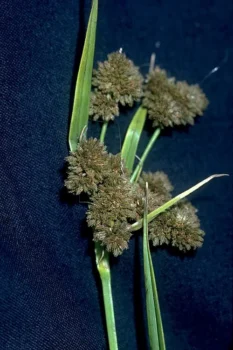
Cloaked Bulrush: The Unsung Hero of Wetland Gardens
If you’re looking to create a thriving wetland garden or need a reliable plant for those perpetually soggy spots in your yard, meet the cloaked bulrush (Scirpus pallidus). This native North American sedge might not win any beauty contests with its modest appearance, but what it lacks in flashy flowers, it makes up for in dependable performance and ecological value.
What Is Cloaked Bulrush?
Cloaked bulrush is a perennial sedge that belongs to the grass-like family of plants. Don’t let the name fool you—this isn’t actually a grass, but rather a member of the sedge family (Cyperaceae). It’s a rhizomatous plant, meaning it spreads underground to form colonies, and can reach an impressive 5 feet in height when happy.
You might also encounter this plant listed under its synonym, Scirpus atrovirens var. pallidus, in older botanical references. The cloaked part of its common name likely refers to how its inconspicuous reddish flowers seem hidden among the green foliage.
Where Does It Call Home?
This adaptable native has one of the most extensive ranges you’ll find, naturally occurring across much of North America. You can find cloaked bulrush growing wild from coast to coast, including Alberta, British Columbia, Manitoba, Ontario, Saskatchewan, and an impressive list of U.S. states: Arizona, Colorado, Idaho, Iowa, Kansas, Minnesota, Missouri, Montana, Nebraska, New Jersey, New Mexico, New York, North Dakota, Oklahoma, Oregon, Pennsylvania, South Dakota, Texas, Utah, Washington, Wisconsin, and Wyoming.
- Species observed
- No observations
Why Consider Cloaked Bulrush for Your Garden?
Here’s where this humble plant really shines. Cloaked bulrush is classified as an Obligate Wetland species across all regions of North America, meaning it almost always occurs in wetlands. This makes it absolutely perfect for:
- Rain gardens: It thrives in areas that collect and slowly absorb stormwater runoff
- Pond edges: Creates natural-looking borders around water features
- Constructed wetlands: Essential for bioswales and natural water filtration systems
- Erosion control: The rhizomatous root system helps stabilize wet soil
- Low-maintenance landscaping: Once established, it practically takes care of itself
With its rapid growth rate and moderate vegetative spread, you’ll get good coverage relatively quickly without worrying about it becoming invasive—after all, it’s a well-behaved native that belongs here!
The Practical Stuff: Growing Conditions
Cloaked bulrush is refreshingly straightforward about its needs. It’s essentially saying, Just keep me wet, and we’ll get along fine! Here are the key requirements:
- Moisture: High anaerobic tolerance means it can handle waterlogged, oxygen-poor soils that would kill many plants
- Soil: Adaptable to coarse, medium, and fine-textured soils
- Sun exposure: Shade intolerant—it needs full sun to perform its best
- pH range: Prefers slightly acidic to neutral soils (5.3 to 7.2)
- Climate: Hardy in cold climates down to -38°F, making it suitable for USDA zones 3-8
- Drought tolerance: Low—this is definitely not a plant for dry gardens
Planting and Care Tips
The good news? Cloaked bulrush is routinely available commercially, so you shouldn’t have trouble sourcing it. Here’s how to get started:
Planting
- Timing: Plant in late spring when the soil has warmed up
- Methods: You can establish it from seed, bare root plants, container plants, or sprigs
- Density: Plan for 1,700 to 4,800 plants per acre, depending on your coverage goals
- Seed considerations: Seeds require cold stratification and have low abundance, so direct seeding can be challenging
Ongoing Care
- Watering: Keep consistently moist to wet—never let it dry out completely
- Fertilizing: Low fertility requirements mean you can skip the fertilizer
- Maintenance: Minimal once established; it has a long lifespan and doesn’t require regular pruning
- Winter care: The foliage dies back in winter but returns reliably each spring
Setting Realistic Expectations
Let’s be honest about what cloaked bulrush brings to the table. This isn’t a plant you’re adding for stunning blooms—its late spring flowers are small and reddish, and definitely not showy. The white seeds that follow are equally inconspicuous and don’t persist long.
What you are getting is a reliable, native workhorse that excels at the important but unglamorous job of thriving in wet conditions while providing habitat structure. Think of it as the dependable friend who might not be the life of the party but is always there when you need them.
The Bottom Line
Cloaked bulrush deserves a place in any wetland garden or rain garden design. Its extensive native range means you’re choosing a plant that truly belongs in the North American landscape, and its obligate wetland status makes it perfect for those challenging wet spots where other plants struggle.
While it won’t wow visitors with flashy flowers, it will provide lasting structure, help manage water runoff, and create habitat in your wetland areas. For gardeners dealing with consistently moist conditions, cloaked bulrush offers a low-maintenance, ecologically appropriate solution that works hard behind the scenes.
So if you’re planning a rain garden, naturalizing a wet area, or simply need a reliable native plant for consistently moist conditions, give cloaked bulrush a chance. It might just become your new favorite unsung garden hero.