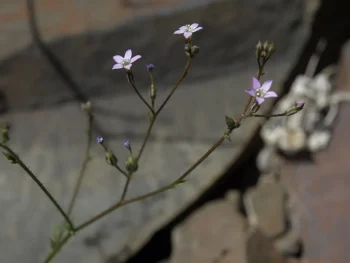
Clokey’s Gilia: A Tiny Desert Gem for Water-Wise Gardens
If you’re looking for a charming little wildflower that won’t fuss over water or demand constant attention, Clokey’s gilia (Gilia clokeyi) might just be your new garden buddy. This delightful annual forb proves that good things really do come in small packages, bringing subtle beauty and ecological value to southwestern gardens without breaking a sweat—or your water bill.
Meet Clokey’s Gilia
Clokey’s gilia is a native annual wildflower that belongs to the phlox family. You might also see it listed under its synonym, Gilia ophthalmoides Brand ssp. clokeyi, but don’t let the fancy scientific names intimidate you. This little plant is as down-to-earth as they come.
As a forb, Clokey’s gilia is essentially an herbaceous flowering plant—think of it as nature’s version of a cottage garden flower, but one that’s perfectly adapted to life in the desert. It lacks the woody stems of shrubs and trees, instead growing as a tender annual that completes its entire life cycle in a single growing season.
Where Does It Call Home?
This southwestern native has made itself at home across six states: Arizona, California, Colorado, Nevada, New Mexico, and Utah. It’s particularly fond of desert and semi-desert regions, where it has learned to thrive in conditions that would make many garden plants wilt at first glance.
- Species observed
- No observations
Why You’ll Love Growing Clokey’s Gilia
There are several compelling reasons to consider adding this little charmer to your garden:
- Water-wise champion: Once established, it requires minimal supplemental watering
- Native plant benefits: Supports local ecosystems and wildlife
- Low maintenance: Perfect for gardeners who prefer plants that take care of themselves
- Pollinator friendly: Attracts native bees and other small beneficial insects
- Self-seeding: Will often return year after year without replanting
- Delicate beauty: Adds subtle texture and color to natural-style gardens
Perfect Garden Settings
Clokey’s gilia shines brightest in:
- Desert and xeriscape gardens
- Native plant landscapes
- Wildflower meadows
- Rock gardens
- Naturalized areas
- Water-wise border plantings
This plant works beautifully as a ground cover or filler plant, weaving between larger desert shrubs and cacti. Its delicate appearance provides a lovely contrast to bolder architectural plants like agaves or barrel cacti.
Growing Conditions and Care
The beauty of Clokey’s gilia lies in its simplicity. Here’s what this easy-going plant prefers:
Sunlight: Full sun is best, though it can tolerate some light shade
Soil: Well-draining sandy or rocky soil is ideal. Heavy clay soils that hold moisture will likely cause problems
Water: Low water requirements once established. Overwatering is more likely to harm it than help it
Climate: Hardy in USDA zones 4-9, making it surprisingly versatile for both cold winters and hot summers
Planting and Care Tips
Getting Clokey’s gilia started in your garden is refreshingly straightforward:
- Timing: Direct seed in fall for spring germination, mimicking natural cycles
- Spacing: Scatter seeds in desired areas—this plant looks best in natural drifts rather than formal rows
- Watering: Provide occasional water during establishment, then back off significantly
- Fertilizing: Generally unnecessary—this plant is adapted to lean soils
- Maintenance: Minimal pruning or deadheading needed; allow plants to set seed for next year’s display
Wildlife and Pollinator Benefits
While small in stature, Clokey’s gilia punches above its weight when it comes to supporting local wildlife. The tiny tubular flowers are perfectly sized for native bees and other small pollinators, providing both nectar and pollen. As the plant sets seed, it may also provide food for small birds and other wildlife.
Is Clokey’s Gilia Right for Your Garden?
This charming native is an excellent choice if you’re looking to create a low-maintenance, water-wise garden that supports local ecosystems. It’s particularly valuable for gardeners in the Southwest who want to work with their natural environment rather than against it.
However, if you prefer bold, showy flowers or need plants that provide structure and year-round interest, you might want to use Clokey’s gilia as a supporting player rather than a star performer. Its subtle beauty and annual nature make it better suited to naturalized settings than formal garden beds.
Whether you’re creating your first xeriscape or adding native touches to an existing landscape, Clokey’s gilia offers an authentic slice of southwestern charm that’s both beautiful and beneficial. Sometimes the smallest gestures toward nature yield the most rewarding results.