Cloudberry: The Arctic Treasure That’s Worth the Challenge
If you’ve ever dreamed of growing something truly unique in your garden—something that feels like a secret treasure from the far north—then let me introduce you to the cloudberry (Rubus chamaemorus). This remarkable native plant produces some of the most prized berries in the world, coveted by foragers from Alaska to Scandinavia. But before you get too excited, fair warning: this isn’t your typical backyard berry!
What Exactly Is a Cloudberry?
Despite its name, the cloudberry isn’t actually related to clouds (shocking, I know). This perennial herb belongs to the rose family and grows as a low, thicket-forming ground cover that rarely exceeds one foot in height. Unlike its bramble cousins, cloudberries are surprisingly delicate-looking, with distinctive three-lobed leaves and charming white flowers that bloom in late spring.
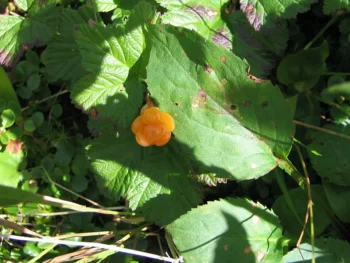
The real showstopper comes in summer when the plant produces its famous berries—initially red, then ripening to a gorgeous orange-amber color that practically glows against the green foliage. Each berry looks like a cluster of tiny golden orbs, earning cloudberries nicknames like bakeapple in some regions.
Where Cloudberries Call Home
Cloudberries are native throughout much of northern North America, including Alaska, Canada, and several northern U.S. states. You’ll find them naturally growing in Alberta, British Columbia, Manitoba, New Brunswick, Nova Scotia, Ontario, Prince Edward Island, Quebec, Saskatchewan, Yukon, Northwest Territories, Nunavut, Maine, Minnesota, New Hampshire, New York, and Newfoundland and Labrador. Basically, if it gets really, really cold where you live, you might be in cloudberry territory.
- Species observed
- No observations
Why Your Garden Might (or Might Not) Want Cloudberries
Here’s where things get interesting. Cloudberries are absolutely native and ecologically valuable, but they’re also notoriously finicky about their growing conditions. Think of them as the divas of the berry world—beautiful and talented, but with very specific demands.
The Good News:
- Completely native to northern regions
- Provides food for small mammals (5-10% of diet) and birds (10-25% of diet)
- Offers occasional cover for terrestrial birds
- Produces highly prized, vitamin-C rich berries
- White flowers attract pollinators in late spring
- Fall foliage turns attractive golden colors
- Extremely cold hardy (down to -38°F!)
The Reality Check:
- Requires very specific growing conditions
- Needs consistently cool temperatures
- Spreads slowly and can be difficult to establish
- Not suitable for warm climate gardens
- May take several years to produce berries
Growing Conditions: The Goldilocks of Berries
Cloudberries are extremely particular about their environment, which explains why they’re not common in cultivation. Here’s what they absolutely must have:
Soil Requirements:
- Acidic soil (pH 4.0-5.2)
- Fine to medium-textured soils
- Consistently moist but well-draining
- High organic matter content
Climate Needs:
- USDA Zones 2-6 (zones 2-4 are ideal)
- At least 90 frost-free days
- Annual precipitation of 35-55 inches
- Cool summers and very cold winters
Light and Moisture:
- Intermediate shade tolerance
- High moisture requirements
- Often found in wetland areas (facultative wetland status)
Best Garden Settings for Cloudberries
If you’re determined to try growing cloudberries, they work best in:
- Bog gardens or constructed wetlands
- Naturalized woodland edges
- Alpine or arctic-themed gardens
- Specialized northern plant collections
- Areas that mimic their natural tundra habitat
Planting and Care Tips
Successfully growing cloudberries requires patience and attention to detail:
Getting Started:
- Seeds require cold stratification before planting
- Spring is typically the best planting time
- Plants can be propagated by seed, bare root, or sprigs
- Space plants about 1,200-2,700 per acre if naturalizing
Ongoing Care:
- Maintain consistent soil moisture
- Mulch to keep roots cool and retain moisture
- Avoid fertilizing heavily—they prefer low to medium fertility
- Be patient—growth rate is rapid once established, but establishment takes time
- Protect from drought stress (they have no drought tolerance)
The Bottom Line: Is Cloudberry Right for You?
Cloudberries are a fascinating native plant that offers unique ecological and culinary value, but they’re definitely not for everyone. If you live in a very cold climate (zones 2-4), have naturally acidic, moist soil, and enjoy gardening challenges, cloudberries might be worth a try. They’re particularly suited for gardeners interested in creating naturalized northern ecosystems or bog gardens.
However, if you’re looking for an easy-care berry for most temperate gardens, you’ll probably have better luck with other native options like elderberries, serviceberries, or native raspberries that are more adaptable to varied conditions.
Remember, cloudberries have a short lifespan and slow regrowth after disturbance, so approach cultivation with realistic expectations. But for the right gardener in the right location, these gold of the north berries can be an incredibly rewarding addition to a specialized native plant garden.
Just don’t blame me when you become obsessed with trying to perfect their growing conditions—cloudberry cultivation has a way of becoming a delightful obsession for northern gardeners!