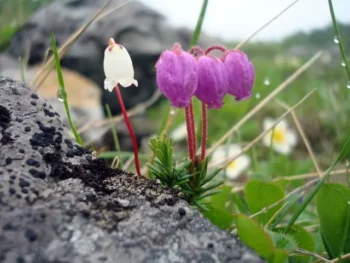
Clubmoss Mountain Heather: A Tiny Arctic Treasure for Cold-Climate Gardens
If you’ve ever wondered what it would be like to bring a piece of the Arctic tundra to your backyard, meet clubmoss mountain heather (Cassiope lycopodioides). This diminutive evergreen shrub might just be the coolest plant you’ve never heard of – literally and figuratively!
What Makes Clubmoss Mountain Heather Special?
Don’t let the name fool you – this isn’t actually a heather at all, despite its common name. Clubmoss mountain heather is a unique little shrub that looks like someone crossed a tiny evergreen tree with a piece of decorative rope. Its scale-like leaves are arranged in four neat rows along the stems, creating a distinctive cord-like appearance that’s absolutely charming up close.
As a perennial shrub, this hardy little plant typically stays quite small, rarely reaching more than a few inches tall, though it can spread to form attractive mats over time. In late spring to early summer, it produces delicate white, bell-shaped flowers that are surprisingly showy for such a petite plant.
Where Does It Come From?
Clubmoss mountain heather is a true native across much of northern North America, calling Alaska, Canada, and select areas of the lower 48 states home. You’ll find it naturally growing in British Columbia, Alaska, and Washington, where it thrives in the cool, mountainous conditions of the Pacific Northwest and beyond.
- Species observed
- No observations
Why You Might Want to Grow It
Here’s where things get interesting – and a bit challenging. If you’re gardening in USDA hardiness zones 2-6 and love the idea of creating an alpine or rock garden, clubmoss mountain heather could be your new best friend. It’s perfect for:
- Rock gardens that need authentic mountain plants
- Alpine garden collections
- Native plant gardens in cooler climates
- Ground cover in naturalized areas
- Adding texture and interest to cold-climate landscapes
The plant also provides benefits for local wildlife, particularly small native bees and other alpine pollinators who appreciate its modest but nectar-rich flowers.
The Reality Check: Growing Conditions
Now for the honest truth – clubmoss mountain heather isn’t for everyone or every garden. This plant has very specific needs that mirror its natural arctic and subarctic habitat:
- Cool temperatures year-round
- Consistently moist but well-draining soil
- Acidic soil conditions
- Partial shade to full sun (in cooler climates only)
- Excellent drainage to prevent root rot
If you live in a warm climate or struggle to keep plants consistently moist, this probably isn’t the plant for you. It’s genuinely difficult to establish and maintain outside of its preferred cool, mountain-like conditions.
Planting and Care Tips
For the brave gardeners in suitable climates who want to try growing clubmoss mountain heather:
- Plant in spring in a location that mimics its natural habitat
- Ensure excellent drainage while maintaining consistent moisture
- Use acidic, humus-rich soil
- Provide some protection from hot afternoon sun in warmer areas of its range
- Be patient – this is a slow-growing plant that may take time to establish
- Consider container growing if your climate is borderline suitable
The Bottom Line
Clubmoss mountain heather is definitely a specialist plant for specialist gardeners. If you’re in the right climate zone, passionate about native plants, and love the challenge of growing something truly unique, it could be a fascinating addition to your alpine or rock garden. Just be prepared for a learning curve and don’t expect the instant gratification you might get from more common garden plants.
For most gardeners, especially those in warmer climates, you might want to admire this little beauty in its natural habitat and choose more adaptable native plants for your garden. But for the right gardener in the right location, clubmoss mountain heather offers a genuine piece of Arctic magic.