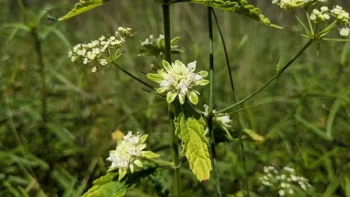
Clustered Bushmint: A Native Wetland Wonder for Your Garden
If you’ve been searching for a native plant that thrives in those perpetually soggy spots in your yard, meet clustered bushmint (Hyptis alata) – a delightful southeastern native that actually loves having wet feet! This unassuming perennial herb might not be the showiest plant in the garden, but it’s a reliable workhorse that brings both ecological benefits and subtle beauty to wetland areas.
What is Clustered Bushmint?
Clustered bushmint is a native perennial forb – essentially a non-woody flowering plant that comes back year after year. As its name suggests, this plant produces clusters of small, delicate flowers and belongs to the mint family, though it’s quite different from your typical garden mint. The aromatic foliage releases a pleasant, mint-like fragrance when brushed against or crushed, adding a sensory element to your garden experience.
You might also encounter this plant listed under its scientific synonyms Hyptis radiata or Hyptis alata var. stenophylla in older gardening references, but they all refer to the same wonderful wetland plant.
Where Does Clustered Bushmint Call Home?
This southeastern native has made itself at home across eight states: Alabama, Florida, Georgia, Louisiana, Mississippi, North Carolina, South Carolina, and Texas. It’s particularly well-adapted to the coastal plain regions where wet, marshy conditions are common.
- Species observed
- No observations
Clustered bushmint is what botanists call an obligate wetland plant, which is a fancy way of saying it almost always grows in wet places. Whether you’re in the Atlantic and Gulf Coastal Plain, the Eastern Mountains and Piedmont, or the Great Plains region, this plant maintains its preference for consistently moist to wet conditions.
Why Grow Clustered Bushmint?
Here’s where clustered bushmint really shines – it’s the perfect solution for those challenging wet areas where many other plants would simply give up and rot. If you have a rain garden, a low-lying area that collects water, or you’re working on wetland restoration, this native gem should be on your list.
The plant produces clusters of small white to pale lavender flowers arranged in dense terminal spikes, creating a subtle but attractive display. While it won’t stop traffic with bold, showy blooms, it offers a more understated beauty that fits perfectly in naturalized settings.
From an ecological standpoint, clustered bushmint is a pollinator magnet. Bees, butterflies, and other beneficial insects appreciate the abundant small flowers, making it an excellent choice for wildlife-friendly gardens. The plant’s ability to thrive in wet conditions also makes it valuable for erosion control and water filtration in rain gardens.
Growing Conditions and Hardiness
Clustered bushmint is happiest in USDA hardiness zones 8-10, making it well-suited for gardeners in the warmer regions of its native range. The plant prefers:
- Full sun to partial shade (though it performs best with at least 6 hours of sunlight)
- Consistently moist to wet soils
- Areas that experience seasonal flooding or standing water
- Clay, loam, or sandy soils with poor drainage (what a refreshing change!)
Planting and Care Tips
One of the best things about clustered bushmint is how low-maintenance it is once you get it established in the right conditions. Here’s how to succeed with this wetland native:
- Site selection: Choose the wettest, most challenging spot in your yard – this plant will thank you for it
- Soil preparation: Unlike most plants, you don’t need to improve drainage. Heavy clay or consistently soggy soil is perfect
- Planting: Spring or early fall are ideal planting times
- Watering: Once established, nature will likely handle this – the plant thrives with consistent moisture
- Maintenance: Minimal care required; the plant self-seeds readily and will naturalize in suitable conditions
Since clustered bushmint readily self-seeds, you may find new plants popping up in suitable wet areas around your garden. This is generally a good thing, especially in naturalized or restoration settings, though you can remove unwanted seedlings if needed.
Perfect Garden Partners
Clustered bushmint works beautifully in several types of garden settings:
- Rain gardens: Pair with other wetland natives like blue flag iris, swamp milkweed, or cardinal flower
- Wildlife gardens: Combine with native sedges and rushes for habitat diversity
- Restoration projects: Excellent for wetland restoration or erosion control along water features
- Native plant gardens: Provides textural interest and seasonal blooms alongside other southeastern natives
Is Clustered Bushmint Right for Your Garden?
Consider adding clustered bushmint to your garden if you:
- Have consistently wet or boggy areas that challenge other plants
- Want to support native pollinators and wildlife
- Are working on rain garden or wetland restoration projects
- Live in zones 8-10 within the plant’s native range
- Prefer low-maintenance plants that don’t require babying
However, this plant might not be the best choice if you’re looking for dramatic flowers, have only well-drained garden areas, or live outside its hardiness zones.
Clustered bushmint proves that sometimes the most valuable garden plants are the quiet achievers – those reliable natives that solve specific challenges while providing ecological benefits. In the right wet spot, this southeastern native will reward you with fragrant foliage, delicate blooms, and the satisfaction of knowing you’re supporting local wildlife with a plant that truly belongs in your landscape.