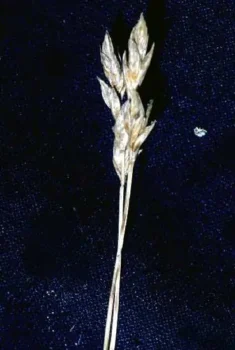
Clustered Field Sedge: A Hardy Native Grass for Every Garden
If you’re looking for a tough, adaptable native plant that can handle whatever Mother Nature throws at it, meet clustered field sedge (Carex praegracilis). This unassuming but incredibly useful perennial sedge might just become your new favorite go-to plant for challenging spots in your landscape.
What is Clustered Field Sedge?
Clustered field sedge is a native North American sedge – essentially a grass-like plant that’s actually more closely related to rushes than true grasses. Don’t let the sedge name fool you into thinking it’s boring; this little powerhouse has some serious garden credentials. You might also see it listed by its botanical name, Carex praegracilis, or its synonym Carex camporum.
This perennial forms dense colonies through underground rhizomes, creating a naturally woven carpet of fine-textured green foliage. It typically reaches about 2 feet tall with an erect, clumping growth form that adds subtle texture to any planting.
Where Does It Grow Naturally?
Talk about a well-traveled plant! Clustered field sedge is native across an impressively wide range, from Alaska down through Canada and across most of the lower 48 states. You’ll find it naturally growing everywhere from Alberta and British Columbia to Arizona and New Mexico, and from Maine to California. This extensive range includes states like Colorado, Montana, Minnesota, Kansas, and many others – basically, if you live in North America, there’s a good chance this sedge calls your region home.
- Species observed
- No observations
Why Choose Clustered Field Sedge for Your Garden?
Here’s where this sedge really shines – it’s incredibly adaptable and useful in the landscape:
- Erosion control champion: Those spreading rhizomes create an excellent root system for stabilizing slopes and preventing soil erosion
- Wetland warrior: With its facultative wetland status across all regions, it thrives in consistently moist areas but can also handle drier conditions
- Low maintenance: Once established, it requires minimal care and has low fertility requirements
- Prairie restoration: Perfect for naturalized areas and prairie restoration projects
- Rain garden star: Its moisture tolerance makes it ideal for rain gardens and bioswales
Growing Conditions and Care
One of the best things about clustered field sedge is how easygoing it is about growing conditions:
Soil: This adaptable sedge handles coarse, medium, and fine-textured soils with ease. It prefers slightly acidic conditions (pH 5.3-6.8) but isn’t overly fussy.
Water: While it has low drought tolerance, it has high tolerance for waterlogged conditions. Think of it as preferring consistently moist soil – perfect for those spots that are too wet for other plants.
Sun: Intermediate shade tolerance means it can handle partial shade but also does well in full sun.
Hardiness: With a minimum temperature tolerance of -38°F, this tough sedge can handle harsh winters across most of North America.
Growth rate: Expect moderate growth with rapid vegetative spread once established. It actively grows during spring and summer.
Planting and Establishment
Getting clustered field sedge started in your garden is straightforward:
- Propagation: You can start it from seed, bare root plants, or sprigs. Seeds have low vigor and slow spread, so plants or sprigs might give you faster results
- Timing: Plant in late spring after the last frost, when it begins its active growing period
- Spacing: Plan for 2,700-4,800 plants per acre, or roughly 1-2 feet apart for garden applications
- Root depth: Ensure at least 10 inches of soil depth for proper root development
Wildlife and Ecological Benefits
While clustered field sedge might not be the showiest pollinator plant (it’s wind-pollinated with inconspicuous green flowers), it offers valuable ecological benefits. The dense growth provides cover and nesting material for birds and small wildlife. As a native species, it supports local ecosystems and food webs in ways that non-native alternatives simply can’t match.
Design Ideas and Landscape Uses
Clustered field sedge works beautifully in:
- Rain gardens: Plant it in the lower, wetter areas where it can show off its wetland adaptability
- Prairie and meadow gardens: Use it as a foundational grass in naturalized plantings
- Erosion control: Perfect for slopes, streambanks, and areas prone to soil loss
- Transition zones: Excellent for bridging the gap between formal garden areas and wild spaces
- Low-maintenance areas: Great for spots where you want attractive coverage without high maintenance
The Bottom Line
Clustered field sedge might not win any beauty contests, but it’s the kind of reliable, hardworking plant that makes gardening easier and more sustainable. If you have challenging wet spots, need erosion control, or want to support native ecosystems while keeping maintenance low, this adaptable sedge deserves serious consideration. Plus, with its extensive native range, you can feel good about choosing a plant that truly belongs in your local landscape.
Sometimes the best garden plants are the ones that just quietly do their job while supporting the bigger picture – and clustered field sedge does exactly that, with style and without fuss.