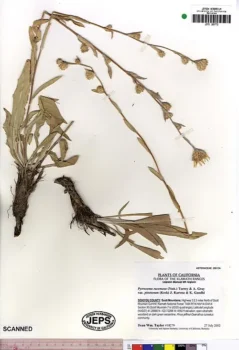
Clustered Goldenweed: A Late-Season Native Bloomer for Western Gardens
If you’re looking for a reliable native perennial that puts on a spectacular show when most other flowers are calling it quits for the season, meet clustered goldenweed (Pyrrocoma racemosa). This unassuming western native might not win any beauty contests in spring, but come late summer and fall, it transforms into a golden beacon that pollinators absolutely adore.
What Makes Clustered Goldenweed Special?
Clustered goldenweed is a true western native, naturally found across California, Idaho, Nevada, Oregon, and Utah. As a perennial forb, it returns year after year without the woody stems of shrubs – think of it as a hardy herbaceous plant that knows how to survive in tough conditions.
This plant earns its common name from its distinctive flower clusters – bright yellow, daisy-like blooms that appear in dense, showy groups rather than scattered individual flowers. The timing couldn’t be more perfect, as these golden displays typically peak in late summer through fall, providing crucial nectar when many other native plants have finished blooming.
- Species observed
- No observations
Why Your Garden Needs This Golden Beauty
There are several compelling reasons to consider adding clustered goldenweed to your landscape:
- Extended blooming season: Provides vibrant color and pollinator resources from late summer into fall
- Drought tolerance: Once established, it thrives with minimal water – perfect for xeriscaping
- Low maintenance: This is a plant it and forget it kind of perennial
- Pollinator magnet: Bees, butterflies, and other beneficial insects flock to the nectar-rich flowers
- Native credentials: Supporting local ecosystems while reducing garden maintenance
Perfect Garden Settings
Clustered goldenweed shines in several garden styles:
- Naturalized areas: Let it spread and create drifts of late-season color
- Drought-tolerant landscapes: Pairs beautifully with other xeric natives
- Wildlife gardens: Essential for supporting pollinators during the autumn nectar dearth
- Native plant gardens: Authentic western character with minimal water needs
Growing Clustered Goldenweed Successfully
The beauty of this native lies in its simplicity. Clustered goldenweed thrives in USDA hardiness zones 4-8, making it suitable for most western gardeners.
Site Requirements:
- Full sun exposure for best flowering
- Well-drained soils (it’s quite forgiving about soil type)
- Good air circulation
Planting and Care:
- Plant in spring after the last frost
- Water regularly the first season to establish roots
- Once established, water deeply but infrequently
- Deadhead spent flowers to encourage continued blooming
- Cut back in late fall or early spring
Water Wisdom
One of clustered goldenweed’s most appealing traits is its facultative wetland status – it can handle both wet and dry conditions. This flexibility means it won’t sulk if your irrigation is inconsistent, but it also won’t mind if it gets extra water during wet years. Just ensure good drainage to prevent root rot.
The Bottom Line
Clustered goldenweed might not be the flashiest plant in the garden center, but it’s exactly the kind of reliable, eco-friendly perennial that makes gardening easier and more rewarding. If you’re ready to embrace native plants that work with your local climate rather than against it, this golden-flowered gem deserves a spot in your landscape. Your late-season pollinators will thank you, and your water bill will too!