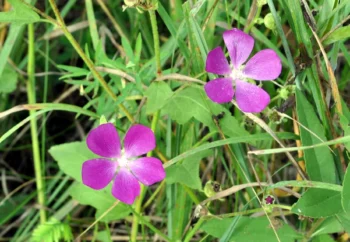
Clustered Poppymallow: A Rare Native Gem Worth Growing Responsibly
If you’re looking for a unique native wildflower that’s both beautiful and beneficial, clustered poppymallow (Callirhoe triangulata) might just be the hidden treasure your garden needs. This charming perennial forb brings delicate pink blooms and ecological value to naturalized landscapes, but there’s an important conservation story every gardener should know before planting.
What Makes Clustered Poppymallow Special
Clustered poppymallow is a low-growing perennial that produces lovely pink to purple mallow flowers arranged in distinctive clusters. Its triangular leaves give the plant its species name triangulata, and create an attractive backdrop for the delicate blooms. As a forb (a non-woody flowering plant), it adds soft texture and natural charm to any native plant collection.
Where It Calls Home
This native beauty has its roots firmly planted in American soil, naturally occurring across parts of the central and southeastern United States. You’ll find wild populations in Alabama, Georgia, Illinois, Indiana, Iowa, Mississippi, Missouri, North Carolina, South Carolina, and Wisconsin. However, it’s become increasingly uncommon across much of its range.
- Species observed
- No observations
An Important Conservation Note
Here’s where things get serious: clustered poppymallow is considered vulnerable to extinction. With a global conservation status of S3 (vulnerable), and an extremely rare S1 status in Alabama, this plant needs our help. If you’re considering adding it to your garden, please only source it from reputable native plant nurseries that propagate their own stock rather than collecting from wild populations.
Garden Value and Design Role
Despite its rarity, clustered poppymallow can be a wonderful addition to the right garden setting. It works beautifully in:
- Prairie restoration projects
- Native plant gardens
- Wildflower meadows
- Naturalized landscape areas
Its low-growing habit makes it an excellent choice for ground cover in natural settings, and the clustered flowers provide visual interest without being overwhelming.
Pollinator Paradise
The nectar-rich flowers of clustered poppymallow are a magnet for native bees and butterflies. By growing this plant, you’re not only preserving a rare species but also supporting local pollinators with an authentic native food source they’ve co-evolved with over thousands of years.
Growing Conditions and Care
Clustered poppymallow is surprisingly adaptable once you understand its preferences:
- Sunlight: Full sun for best flowering
- Soil: Well-drained soils; adaptable to various soil types
- Water: Drought tolerant once established, but benefits from occasional watering during dry spells
- Hardiness: Thrives in USDA zones 4-8
Planting and Care Tips
The good news is that clustered poppymallow is relatively low-maintenance once established. Here’s how to give it the best start:
- Plant in spring after the last frost
- Choose a sunny location with good drainage
- Water regularly during the first growing season to help establishment
- Once established, it’s quite drought tolerant
- Allow natural seed dispersal to help expand populations (if space permits)
The Bottom Line
Clustered poppymallow represents both an opportunity and a responsibility for native plant gardeners. While it’s a beautiful and ecologically valuable addition to appropriate landscapes, its vulnerable status means we must be thoughtful stewards. If you choose to grow this rare gem, source it responsibly and consider yourself part of its conservation story. Your garden could become a small sanctuary helping to preserve this unique piece of American botanical heritage for future generations.
Remember: every responsibly grown clustered poppymallow is a small but meaningful contribution to conserving our native plant diversity. That’s gardening with purpose!