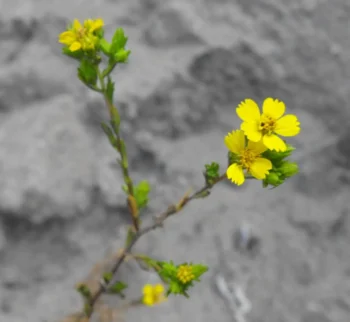
Clustered Tarweed: A Late-Season Native Bloomer Worth Growing
If you’re looking for a native plant that keeps the party going when most wildflowers have called it quits for the season, meet clustered tarweed (Hemizonia fasciculata). This charming annual might not win any beauty contests against showier natives, but it’s got some serious staying power and ecological value that make it a worthy addition to your native plant palette.
What Is Clustered Tarweed?
Clustered tarweed is a native annual forb that belongs to the sunflower family. Don’t let the name tarweed put you off – while the plant does have a somewhat resinous, aromatic quality to its foliage, it’s not unpleasant. You might also see this plant listed under its scientific synonyms Deinandra fasciculata or Hemizonia ramosissima in older references.
As an annual, this plant completes its entire life cycle in one growing season, making it a great choice for filling in gaps in your garden or adding seasonal interest to naturalized areas.
Where Does It Naturally Grow?
This native gem calls the western United States home, with its primary distribution in California. Interestingly, it also shows up in Massachusetts, though California remains its main stomping ground. As a plant native to the lower 48 states, it has adapted to a range of conditions across different regions.
- Species observed
- No observations
What Does It Look Like?
Clustered tarweed forms a compact, branching plant that produces clusters of small, bright yellow composite flowers. The blooms are arranged in dense, rounded clusters that give the plant its common name. While each individual flower might be small, the clustered arrangement creates a cheerful display that stands out in late summer and fall gardens.
The plant has a somewhat spreading growth habit and aromatic foliage that releases its scent when brushed against or crushed.
Why Grow Clustered Tarweed?
Perfect for Pollinator Gardens
One of the best reasons to include clustered tarweed in your garden is its value to pollinators. This plant blooms later in the season when many other flowers have faded, providing crucial nectar and pollen resources for native bees, butterflies, and other beneficial insects when they need it most.
Low-Maintenance Native Choice
As a native plant, clustered tarweed is naturally adapted to local growing conditions. Once established, it requires minimal care and can handle drought conditions well. Its annual nature means it won’t become overwhelming in your garden – it will reseed where conditions are right but won’t take over like some aggressive perennials.
Great for Natural Landscapes
This plant shines in wildflower meadows, naturalized areas, and native plant gardens. It’s perfect for gardeners who want to create habitat for wildlife while maintaining a more relaxed, natural aesthetic.
Where to Plant It
Clustered tarweed is classified as Facultative Upland across most of its range, meaning it typically prefers non-wetland conditions but can tolerate some moisture. This makes it versatile for various garden situations:
- Native plant gardens
- Drought-tolerant landscapes
- Wildflower meadows
- Naturalized areas
- Pollinator gardens
- Restoration projects
Growing Conditions and Care
Sunlight and Soil
Clustered tarweed thrives in full sun locations with well-drained soil. It’s adapted to California’s Mediterranean climate and can handle periods of drought once established. The plant isn’t particularly picky about soil type but prefers conditions that aren’t waterlogged.
Hardiness Zones
Based on its natural distribution, clustered tarweed is best suited for USDA hardiness zones 8-10, though it may perform well in protected locations in zone 7.
Planting Tips
As an annual that readily self-seeds, clustered tarweed is often best established by direct seeding in fall or early spring. Here are some tips for success:
- Scatter seeds in prepared soil in fall for spring germination
- Lightly rake seeds into soil surface – don’t bury them deeply
- Water gently until germination occurs
- Thin seedlings if they come up too thickly
- Allow some plants to go to seed for natural reseeding
Ongoing Care
Once established, clustered tarweed is refreshingly low-maintenance. Water during extended dry periods in spring, but reduce watering as the season progresses. The plant is naturally drought-adapted and too much water can actually reduce flowering.
Is Clustered Tarweed Right for Your Garden?
Clustered tarweed is an excellent choice if you’re looking to support native pollinators, create wildlife habitat, or add late-season interest to a natural-style garden. It’s particularly valuable in areas where you want a low-maintenance native annual that provides ecological benefits.
However, if you prefer highly manicured gardens or need plants with showy, long-lasting flowers, you might want to consider other natives. The tarweed name and aromatic foliage might also not appeal to gardeners who prefer plants without strong scents.
Overall, clustered tarweed is a solid choice for native plant enthusiasts who appreciate plants that work hard for local ecosystems while asking for very little in return. Give it a try in your wildflower meadow or naturalized area – the late-season pollinators will thank you!