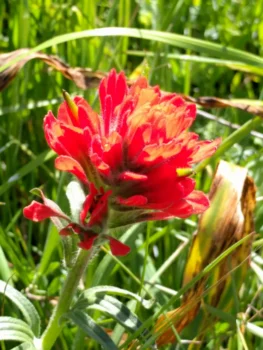
Coast Indian Paintbrush: A Spectacular Native Wildflower for California Gardens
If you’re looking to add a splash of vibrant color to your California garden while supporting native wildlife, the coast Indian paintbrush might be just the ticket. This stunning perennial wildflower brings the brilliant reds and oranges of California’s coastal landscapes right to your backyard, creating eye-catching displays that both you and local pollinators will absolutely love.
What Makes Coast Indian Paintbrush Special
Coast Indian paintbrush (Castilleja affinis affinis) is a true California native, naturally occurring throughout the coastal regions of the Golden State. This perennial herb has evolved perfectly for coastal conditions, making it an excellent choice for gardeners wanting to create authentic California landscapes.
The plant gets its common name from the brilliant colored bracts (modified leaves) that surround the small, inconspicuous flowers. These bracts create the appearance of a paintbrush dipped in vibrant paint – usually in shades of red, orange, or sometimes pink. The actual flowers are small and tubular, nestled within these colorful bracts.
- Species observed
- No observations
Garden Design and Landscape Role
Coast Indian paintbrush serves multiple roles in garden design:
- Provides striking color contrast in wildflower meadows and native plant gardens
- Works beautifully in coastal and Mediterranean-style landscapes
- Excellent for naturalistic plantings that mimic California’s coastal prairies
- Creates stunning seasonal displays when planted in drifts
- Adds vertical interest with its upright growth habit
This plant shines brightest in native plant gardens, wildflower meadows, and naturalistic landscapes. It’s particularly well-suited for coastal gardens, drought-tolerant plantings, and anywhere you want to recreate the magic of California’s wild spaces.
Growing Conditions and Care
Here’s where coast Indian paintbrush gets interesting – and a bit challenging. Like other members of the Castilleja genus, this plant is what botanists call hemiparasitic. Don’t worry, it’s not as scary as it sounds! It simply means the plant can photosynthesize on its own but also connects to the roots of nearby plants to supplement its nutrition.
Preferred growing conditions:
- Full sun to partial shade
- Well-draining soils (clay, loam, or sandy soils all work)
- Low to moderate water needs once established
- Thrives in coastal California’s Mediterranean climate
- USDA Hardiness Zones 8-10
Planting and Care Tips
Successfully growing coast Indian paintbrush requires understanding its unique needs:
The Host Plant Secret: Because of its hemiparasitic nature, coast Indian paintbrush performs best when planted near compatible host plants. Native grasses like purple needlegrass or California fescue make excellent companions, as do other native perennials.
Planting tips:
- Start with nursery-grown plants rather than seeds for best results
- Plant in fall for spring establishment
- Space plants 12-18 inches apart
- Water regularly the first year, then reduce to occasional deep watering
- Avoid fertilizing – the plant prefers lean soils
Maintenance: Once established, coast Indian paintbrush is relatively low-maintenance. Deadhead spent flowers to encourage more blooms, and allow the plant to go dormant naturally in summer. Cut back old growth in late fall or early winter.
Benefits for Pollinators and Wildlife
Coast Indian paintbrush is a pollinator magnet! The tubular flowers are perfectly designed for:
- Hummingbirds, which are primary pollinators
- Long-tongued bees and butterflies
- Native moths and other beneficial insects
The plant typically blooms from spring through early summer, providing crucial nectar when many native plants are just getting started for the season.
Is Coast Indian Paintbrush Right for Your Garden?
Consider planting coast Indian paintbrush if you:
- Want to support native California wildlife and pollinators
- Love bold, vibrant colors in your garden
- Are creating a drought-tolerant or Mediterranean-style landscape
- Enjoy the challenge of growing unique, specialized plants
- Want to recreate California’s natural coastal beauty
Keep in mind that this plant does require some specific conditions and companion plants to thrive, so it might not be the best choice for beginners or those wanting extremely low-maintenance options.
A True California Treasure
Coast Indian paintbrush represents the wild beauty of California’s coastal regions. While it may require a bit more thought and planning than your average garden perennial, the spectacular display of color and the wildlife benefits make it well worth the effort. Plus, there’s something deeply satisfying about growing a plant that’s been painting California’s landscapes with brilliant color for thousands of years.
Whether you’re a native plant enthusiast or simply someone who appreciates stunning garden displays, coast Indian paintbrush deserves consideration for your California garden. Just remember to plant it with friends – both the plant kind and the human kind will appreciate the spectacular show!