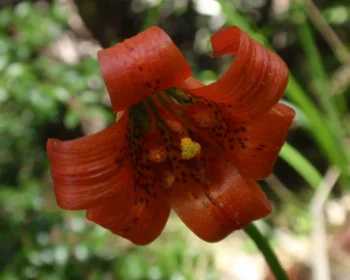
Coast Lily: A Rare California Native Worth Protecting
Meet the coast lily, one of California’s most precious floral gems. This isn’t your typical garden-variety lily – it’s a rare native wildflower that’s holding on by a thread along our foggy coastline. If you’ve never heard of Lilium maritimum, you’re not alone. This elusive beauty is one of those plants that makes conservation-minded gardeners’ hearts skip a beat.
A California Original
The coast lily is as Californian as it gets, native exclusively to the Golden State’s misty coastal regions. You’ll find this perennial forb – that’s botanist speak for a non-woody flowering plant – clinging to life in just a handful of spots in Humboldt and Mendocino counties. It’s what we call a true endemic, meaning it exists nowhere else on Earth.
- Species observed
- No observations
Why This Plant Deserves Your Attention (And Respect)
Here’s where things get serious. The coast lily isn’t just rare – it’s imperiled. With a conservation status of S2, this means there are likely only 6 to 20 known populations left, with somewhere between 1,000 to 3,000 individual plants remaining in the wild. To put that in perspective, there are probably more people in your local grocery store on a busy Saturday than there are coast lilies in existence.
This rarity status means that if you’re considering adding this plant to your garden, you absolutely must source it responsibly. Never, ever collect plants or seeds from wild populations – that could push this species closer to extinction.
What Makes Coast Lily Special
Despite its precarious situation, the coast lily is undeniably stunning. Picture this: delicate orange-red flowers with elegantly recurved petals that curl backward, revealing prominent stamens like nature’s own chandelier. Each stem typically produces 1 to 3 fragrant blooms that seem to glow against the foggy coastal backdrop.
As a perennial forb, it dies back to its underground bulb each year, emerging fresh each growing season. It’s perfectly adapted to California’s Mediterranean climate and the unique conditions of our coastal fog belt.
Growing Coast Lily: Not for Beginners
Let’s be honest – this isn’t a plant for casual gardeners. Coast lily is what we call a collector’s plant, suited for experienced native plant enthusiasts who understand the commitment involved. Here’s what you need to know:
Location Requirements:
- USDA hardiness zones 9-10 (coastal California conditions)
- Partial shade with morning sun
- Protection from hot, dry winds
- Access to coastal fog or regular misting
Soil and Water Needs:
- Moist, well-draining soil that never completely dries out
- Rich, organic matter similar to forest floor conditions
- Consistent moisture but not waterlogged conditions
- Facultative wetland status means it tolerates both wet and moderately dry conditions
Garden Role and Design Ideas
If you’re fortunate enough to have the right conditions and access to responsibly sourced plants, coast lily works beautifully in:
- Native plant collections and conservation gardens
- Coastal-themed landscapes with other fog-loving plants
- Specialized lily or bulb gardens
- Educational gardens focused on rare California natives
Pair it with other coastal California natives like coastal redwood sorrel, western sword fern, or California huckleberry for an authentic coastal forest understory feel.
Supporting Wildlife
Like most lilies, coast lily serves as a pollinator magnet. Its bright flowers and sweet fragrance attract butterflies, native bees, and even hummingbirds. Every bloom helps support our local pollinator populations – another reason why preserving this species matters.
The Bottom Line
Coast lily represents both the beauty and fragility of California’s native flora. While it’s not a plant most gardeners will grow, those with the right conditions, experience, and access to ethically sourced plants can play a small but important role in its conservation.
If you can’t grow coast lily yourself, consider supporting organizations working to protect its remaining habitat or visiting it in its natural range during blooming season. Sometimes the best way to appreciate a rare plant is simply knowing it exists and doing our part to keep it that way.
Remember: every rare native plant in cultivation is a small victory for conservation, but only when grown responsibly and with respect for wild populations.