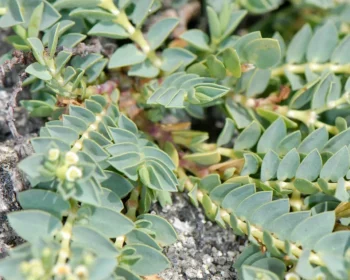
Coastal Beach Sandmat: The Perfect Native Ground Cover for Seaside Gardens
If you’re gardening near the coast and struggling to find plants that can handle salty air, sandy soil, and blazing sun, let me introduce you to a little native gem that might just be your new best friend. Coastal beach sandmat (Chamaesyce mesembrianthemifolia) is one of those unsung heroes of the plant world – not flashy, but incredibly tough and perfectly adapted to challenging coastal conditions.
What Exactly is Coastal Beach Sandmat?
This perennial native belongs to the spurge family and grows as a low-spreading herb with succulent-like characteristics. Don’t let the technical classification fool you – this is essentially a hardy ground cover that knows how to survive where other plants throw in the towel. You might also encounter it under its former scientific names like Euphorbia mesembrianthemifolia or Chamaesyce buxifolia in older gardening references.
Where Does This Tough Little Plant Call Home?
Coastal beach sandmat is native to the southeastern United States, specifically Florida, as well as Puerto Rico and the U.S. Virgin Islands. It’s perfectly at home in the hot, humid, salty environment of coastal regions where many other plants struggle to establish themselves.
- Species observed
- No observations
Why You Might Want This Plant in Your Garden
Here’s where coastal beach sandmat really shines – it’s the ultimate low-maintenance ground cover for tough spots. This plant has some serious benefits:
- Thrives in sandy, well-draining soils where other plants fail
- Handles salt spray and coastal conditions like a champ
- Requires minimal water once established
- Provides year-round green coverage in warm climates
- Supports local ecosystems as a native species
- Attracts small pollinators with its tiny flowers
The Perfect Garden Situations
Coastal beach sandmat isn’t trying to be the star of your flower border – it’s the reliable supporting actor that makes everything else look good. It’s perfect for:
- Coastal and seaside gardens
- Xeriscaping and drought-tolerant landscapes
- Native plant gardens
- Areas with poor, sandy soil
- Ground cover in full sun locations
This plant has what’s called a facultative wetland status, which means it’s flexible – it can handle both wet and dry conditions, making it particularly valuable in areas where moisture levels fluctuate.
Growing Conditions: Keep It Simple
One of the best things about coastal beach sandmat is that it doesn’t ask for much. Here’s what it needs to thrive:
- Sunlight: Full sun exposure
- Soil: Sandy, well-draining soil (poor soil is actually preferred!)
- Water: Low to moderate water needs; drought tolerant once established
- Climate: USDA hardiness zones 9b-11
- Salt tolerance: High – perfect for coastal locations
Planting and Care Tips
The beauty of working with native plants like coastal beach sandmat is that they’re already adapted to local conditions. Here are some tips for success:
- Plant in spring or fall for best establishment
- Don’t amend sandy soil – this plant actually prefers poor conditions
- Water regularly during the first few months, then back off as it establishes
- No fertilization needed – too much nutrition can actually make it less resilient
- Minimal pruning required; just remove any dead material as needed
Is This Plant Right for Your Garden?
Coastal beach sandmat is perfect if you’re looking for a native, low-maintenance ground cover that can handle challenging coastal conditions. It’s not the plant for you if you’re gardening in cooler zones (below 9b), prefer lush, tropical-looking foliage, or need something with showy flowers.
This plant is all about function over flash – it quietly does its job of covering ground, preventing erosion, and supporting local wildlife without demanding much attention. For coastal gardeners dealing with salt spray, sandy soil, and intense sun, coastal beach sandmat might just be the reliable, native solution you’ve been searching for.