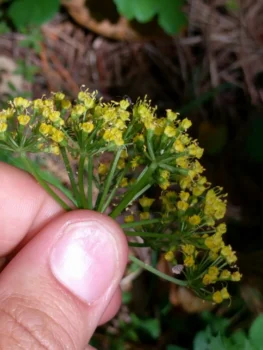
Coastal Biscuitroot: A Delicate California Native Worth Protecting
Meet coastal biscuitroot (Lomatium parvifolium), a charming yet vulnerable California native that deserves a spot in your wildlife-friendly garden. This delicate perennial forb might not be the showiest plant on the block, but its understated beauty and ecological value make it a treasure for native plant enthusiasts.
What Makes Coastal Biscuitroot Special
Coastal biscuitroot is a true California original, found naturally only within the Golden State’s diverse landscapes. As a member of the carrot family, this herbaceous perennial produces clusters of tiny white to cream-colored flowers arranged in delicate umbrella-shaped formations called umbels. The finely divided, fernlike foliage creates an airy, textural contrast that adds subtle elegance to any native plant collection.
This isn’t your typical backyard perennial, though. Coastal biscuitroot carries a Global Conservation Status of S3, meaning it’s considered vulnerable throughout its range. With typically only 21 to 100 occurrences and between 3,000 to 10,000 individuals remaining, this species faces real conservation challenges.
Where It Grows Naturally
Coastal biscuitroot calls California home, thriving in the state’s coastal sage scrub and chaparral communities. You’ll find it growing naturally in well-draining soils from sea level up into the foothills, where it has adapted to the Mediterranean climate of wet winters and dry summers.
- Species observed
- No observations
Why Consider Growing Coastal Biscuitroot
Despite its vulnerable status—or perhaps because of it—coastal biscuitroot offers compelling reasons for inclusion in the right garden:
- Pollinator magnet: The small umbrella-shaped flowers attract native bees, beneficial insects, and other small pollinators
- Drought tolerance: Once established, it thrives with minimal summer water
- Authentic California character: Adds genuine native plant diversity to landscapes
- Low maintenance: Requires little care once properly established
- Conservation value: Helps support a vulnerable species when grown from responsibly sourced material
Perfect Garden Settings
Coastal biscuitroot shines in:
- Native California plant gardens
- Mediterranean-style landscapes
- Wildlife and pollinator gardens
- Drought-tolerant xeriscapes
- Natural restoration projects
This plant works beautifully as an understory species, weaving through larger natives and filling gaps with its delicate presence.
Growing Conditions and Care
Success with coastal biscuitroot depends on mimicking its natural habitat:
- Climate zones: USDA zones 8-10 (perfect for California’s mild climate)
- Sunlight: Full sun to partial shade
- Soil: Well-draining soils are absolutely essential
- Water: Drought-tolerant once established; avoid summer irrigation
- Maintenance: Minimal care required after establishment
Planting and Establishment Tips
The best approach for coastal biscuitroot is starting from seed planted in fall, allowing natural winter rains to provide germination moisture. Here’s your game plan:
- Plant seeds in late fall when temperatures cool
- Ensure excellent drainage—this plant won’t tolerate wet feet
- Provide occasional water the first year, then reduce dramatically
- Avoid fertilizers, which can harm this adapted native
- Be patient—establishment can take time
Important Conservation Considerations
Here’s the crucial part: due to coastal biscuitroot’s vulnerable conservation status, only source plants or seeds from reputable native plant nurseries that use responsibly collected, legally obtained materials. Never collect from wild populations, as this could further threaten already limited numbers.
By growing this species in appropriate gardens, you’re not just adding beauty to your landscape—you’re participating in conservation efforts to protect California’s botanical heritage.
The Bottom Line
Coastal biscuitroot isn’t for every garden or every gardener. Its limited range means it’s primarily suitable for California landscapes, and its vulnerable status requires responsible sourcing. However, for native plant enthusiasts in appropriate climates who can provide proper growing conditions, this delicate beauty offers the chance to grow something truly special while supporting conservation efforts.
If you’re passionate about native plants and committed to responsible gardening practices, coastal biscuitroot could be a meaningful addition to your collection—just remember to source it responsibly and give it the well-draining, low-water conditions it craves.