Coastal Manroot: A Wild and Wonderful Native Vine for Pacific Northwest Gardens
If you’re looking to add some untamed beauty to your Pacific Northwest garden, meet coastal manroot (Marah oreganus) – a native vine that’s equal parts fascinating and functional. This perennial powerhouse might not be the most refined garden plant, but it brings a wild, natural charm that’s perfect for the right setting.
What Is Coastal Manroot?
Coastal manroot is a native perennial vine that belongs to the cucumber family. Don’t let the manroot name intimidate you – it simply refers to the plant’s large, tuberous root system. This sprawling plant is classified as a forb herb, meaning it’s a non-woody plant that dies back to its roots each winter and emerges fresh each spring.
You might also see this plant listed under its former scientific name, Echinocystis oregana, but Marah oreganus is the current accepted name among botanists.
Where Does Coastal Manroot Grow Naturally?
This native beauty calls the Pacific Coast home, naturally occurring in British Columbia, Washington, Oregon, and California. It’s perfectly adapted to the coastal climate and conditions of this region, making it an excellent choice for Pacific Northwest native plant gardens.
- Species observed
- No observations
What Does Coastal Manroot Look Like?
Coastal manroot is definitely a statement plant. Here’s what to expect:
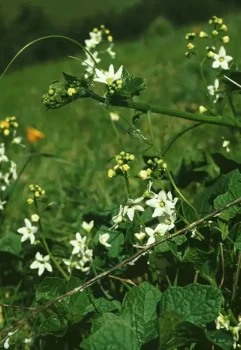
- Large, broad palmate leaves that can span 6-8 inches across
- Vigorous climbing or sprawling growth habit that can reach 15-20 feet in length
- Small, white star-shaped flowers that bloom in summer
- Dramatic spiky seed pods that look like medieval weapons (hence another common name, wild cucumber)
- Dies back completely in winter, emerging from underground tubers in spring
Should You Plant Coastal Manroot in Your Garden?
Coastal manroot isn’t for everyone, but it could be perfect for you if:
- You have a wild or naturalized garden area
- You need erosion control on a slope
- You want to attract native pollinators
- You enjoy unique, conversation-starting plants
- You have plenty of space for a vigorous spreader
Think twice if: You have a formal garden, limited space, or prefer tidy, contained plants. This vine has a mind of its own and will sprawl wherever it pleases!
Growing Conditions and Care
One of the best things about coastal manroot is how easy it is to grow once you understand its needs:
- Hardiness: Thrives in USDA zones 7-10
- Light: Partial shade to full sun
- Soil: Well-draining soil; tolerates poor soils once established
- Water: Moderate water during growing season, drought tolerant once established
- Space: Give it room to roam – this isn’t a plant for small spaces
Planting and Care Tips
Getting started with coastal manroot is surprisingly simple:
- Plant seeds in fall for best germination rates
- Choose a location where the vine can spread freely
- Water regularly the first year while establishing
- After that, minimal care is needed – this is a true plant it and forget it native
- Don’t worry when it dies back in winter – it’ll return from its underground tubers in spring
Benefits for Wildlife and Pollinators
While coastal manroot might look wild and unruly, it’s actually working hard for your local ecosystem. The small white flowers are excellent for attracting native bees and other pollinators during the summer blooming period. The dense foliage also provides cover for small wildlife and birds.
The Bottom Line
Coastal manroot is definitely not your typical garden plant, but that’s exactly what makes it special. If you have the space and appreciation for native plants that march to their own drummer, this Pacific Northwest native could be a fantastic addition to your wild garden or naturalized landscape. Just remember – give it space, and it’ll reward you with years of dramatic, low-maintenance beauty.