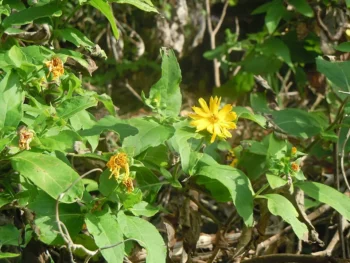
Coastal Plain Creepingoxeye: A Caribbean Beauty for Warm Climate Gardens
If you’re looking for a cheerful, low-maintenance ground cover that can handle tough coastal conditions, you might want to get acquainted with coastal plain creepingoxeye (Wedelia fruticosa). This Caribbean native brings sunny yellow blooms and glossy green foliage to gardens in the warmest parts of the United States, though it comes with both benefits and considerations worth knowing about.
What is Coastal Plain Creepingoxeye?
Coastal plain creepingoxeye is a perennial shrub that typically stays under 13-16 feet tall, though it’s usually much shorter when used as ground cover. This multi-stemmed woody plant produces bright yellow, daisy-like flowers that bloom throughout much of the year in favorable conditions. You might also see it listed under its former scientific names, including Stemmodontia calycina or Wedelia calycina.
Where Does It Come From?
This sun-loving plant is native to Puerto Rico and the U.S. Virgin Islands, where it thrives in coastal environments. In the continental United States, you’ll find it growing in Alabama, where it has naturalized and reproduces on its own. While it’s considered non-native to the lower 48 states, it has established itself successfully in suitable climates.
- Species observed
- No observations
The Good, The Bad, and The Sunny
Let’s be honest about what you’re getting into with coastal plain creepingoxeye. On the plus side, this plant is incredibly tough and low-maintenance once established. It laughs in the face of salt spray, shrugs off drought, and keeps blooming when other plants call it quits. The cheerful yellow flowers attract butterflies and bees, making it a nice addition for pollinator-friendly gardens.
However, there’s a catch – this plant can be quite the spreader. While not officially listed as invasive, it has a tendency to take over if given the chance. Think of it as that enthusiastic friend who doesn’t know when the party’s over.
Growing Conditions and Care
If you decide to invite coastal plain creepingoxeye into your garden, here’s what it needs to thrive:
- Climate: USDA hardiness zones 9b through 11
- Sunlight: Full sun to partial shade (though it flowers best in full sun)
- Soil: Well-draining soil; quite adaptable to different soil types
- Water: Drought tolerant once established, but appreciates occasional watering
- Salt tolerance: Excellent – perfect for coastal properties
Best Uses in the Landscape
This plant shines in specific situations:
- Coastal gardens where salt spray kills other plants
- Erosion control on slopes or embankments
- Low-maintenance ground cover in hot, dry areas
- Xeriscaping and drought-tolerant landscape designs
- Naturalized areas where some spreading is welcome
Planting and Maintenance Tips
Getting coastal plain creepingoxeye established is pretty straightforward. Plant it in spring after the last frost, giving it plenty of room to spread. Water regularly for the first few weeks, then back off – this plant prefers to dry out between waterings.
The main maintenance task is keeping it in bounds. Regular pruning or edging will prevent it from wandering into areas where it’s not welcome. In very favorable conditions, you might need to be quite firm about setting boundaries.
Wetland Considerations
Interestingly, this plant has different moisture preferences depending on where it’s growing. In the Atlantic and Gulf Coastal Plain region, it’s classified as an obligate upland plant, meaning it almost never occurs in wetlands. However, in its native Caribbean range, it’s more flexible about moisture levels and can handle both wet and dry conditions.
Should You Plant It?
The decision comes down to your specific situation and gardening philosophy. If you have a challenging coastal site where native plants struggle, and you’re committed to managing its spread, coastal plain creepingoxeye can be a practical solution. However, if you prefer to stick with native plants, consider exploring native alternatives that might serve similar functions in your local ecosystem.
For Alabama gardeners specifically, research native ground covers and coastal plants that could provide similar benefits without the concerns about non-native species establishment. Your local native plant society or extension office can point you toward excellent native alternatives.
Whatever you decide, remember that successful gardening is about finding the right plant for the right place – and being honest about your commitment to maintenance along the way!