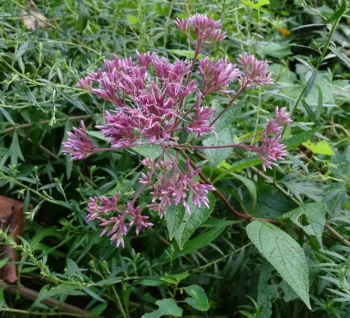
Coastal Plain Joe Pye Weed: A Native Beauty for Wet Spots in Your Garden
If you’ve been scratching your head over what to plant in that persistently soggy spot in your yard, let me introduce you to a fantastic native solution: coastal plain joe pye weed (Eutrochium dubium). This delightful perennial might have a quirky name, but it’s a serious performer when it comes to transforming wet areas into gorgeous, wildlife-friendly spaces.
What Exactly Is Coastal Plain Joe Pye Weed?
Coastal plain joe pye weed, also known simply as coastal plain joepyeweed, is a native North American perennial that belongs to the sunflower family. Don’t let its scientific name intimidate you – this plant is as down-to-earth as they come! You might also see it listed under its older scientific names, Eupatorium dubium or Eupatoriadelphus dubius, but they’re all the same wonderful plant.
As a forb (basically a fancy term for a non-woody flowering plant), this beauty grows as a clumping perennial that comes back year after year, making it a reliable addition to your garden lineup.
Where Does It Call Home?
This native gem has quite an impressive range along the eastern seaboard. You’ll find coastal plain joe pye weed growing naturally from Nova Scotia down through the Maritime provinces and across much of the eastern United States. Its range includes Connecticut, Delaware, the District of Columbia, Maine, Maryland, Massachusetts, New Hampshire, New Jersey, New York, North Carolina, Pennsylvania, Rhode Island, South Carolina, Vermont, Virginia, and West Virginia.
- Species observed
- No observations
Why You’ll Fall in Love with This Plant
Coastal plain joe pye weed brings serious aesthetic appeal to the garden, especially in late summer when many other plants are calling it quits. From July through September, it produces clusters of small, pinkish-purple to white flowers arranged in attractive flat-topped displays. These blooms sit atop tall stems adorned with lance-shaped leaves that create an elegant, upright presence in the landscape.
But the real magic happens when you consider what this plant does for local wildlife. Those late-season flowers are absolutely beloved by butterflies, bees, and other pollinators who desperately need nectar sources as summer winds down. It’s like hosting a farewell party for the season’s pollinators!
Perfect Spots for Planting
Here’s where coastal plain joe pye weed really shines – it’s practically made for those challenging wet areas that give many gardeners headaches. This plant is classified as facultative wetland, which means it usually hangs out in wetlands but can adapt to drier conditions if needed.
Consider coastal plain joe pye weed for:
- Rain gardens and bioswales
- Wet meadows and naturalized areas
- Back-of-border plantings in perennial gardens
- Native plant gardens
- Pollinator gardens
- Areas with clay soil or poor drainage
Growing Conditions That Make It Happy
The beauty of coastal plain joe pye weed lies in its easygoing nature. This plant thrives in USDA hardiness zones 4-8, making it suitable for most of the eastern United States and southeastern Canada.
For optimal growth, provide:
- Full sun to partial shade (though it prefers more sun)
- Consistently moist to wet soil
- Clay, loam, or sandy soil – it’s not picky!
- pH levels from slightly acidic to neutral
The plant is remarkably tolerant of periodic flooding and heavy clay soils that would make other perennials throw in the towel.
Planting and Care Made Simple
Getting coastal plain joe pye weed established in your garden is refreshingly straightforward. Plant it in spring after your last frost date, spacing plants about 2-3 feet apart to give them room to spread into their natural clumping habit.
Once established, this native requires minimal fuss:
- Water regularly during the first growing season
- After establishment, natural rainfall usually provides adequate moisture
- Cut back spent flower heads if you don’t want self-seeding
- Perform a full cutback in late winter or early spring
- Divide clumps every 3-4 years if desired
The plant may self-seed in favorable conditions, which is usually a blessing rather than a curse – more free plants!
The Bottom Line
Coastal plain joe pye weed proves that native plants can be both beautiful and practical. If you’re dealing with wet soil conditions, want to support local wildlife, or simply love the idea of late-season color that requires minimal maintenance, this native perennial deserves a spot in your garden. Plus, there’s something satisfying about growing a plant that’s perfectly adapted to your local environment – it’s like giving Mother Nature a friendly nod of approval.
So next time you’re staring at that soggy corner of your yard wondering what on earth to plant there, remember coastal plain joe pye weed. Your local butterflies (and your future self) will thank you!