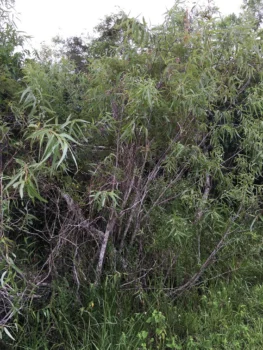
Coastal Plain Willow: A Fast-Growing Native Tree for Wet Spots
If you’ve got a soggy spot in your yard that makes you scratch your head wondering what to plant, meet your new best friend: the coastal plain willow (Salix caroliniana). This graceful native tree doesn’t just tolerate wet feet—it absolutely loves them! With its elegant drooping branches and rapid growth, it’s like nature’s solution to those tricky waterlogged areas where other trees fear to root.
What Makes Coastal Plain Willow Special?
The coastal plain willow is a perennial tree that can reach impressive heights of up to 33 feet at maturity, typically growing 25 feet in just 20 years. Talk about instant gratification! This fast-growing beauty develops multiple stems and takes on an erect, graceful form that adds both structure and movement to your landscape.
In early spring, before most plants have even thought about waking up, coastal plain willow produces yellowish-green catkins that provide crucial early-season nectar for bees and other pollinators. Come fall, the coarse-textured green foliage transforms into conspicuous golden tones, giving you a lovely seasonal show.
Native Range and Distribution
This tree is a true native of the lower 48 states, naturally occurring across a impressive range that includes Alabama, Arkansas, Delaware, District of Columbia, Florida, Georgia, Illinois, Indiana, Kansas, Kentucky, Louisiana, Maryland, Mississippi, Missouri, New Jersey, North Carolina, Ohio, Oklahoma, Pennsylvania, South Carolina, Tennessee, Texas, Virginia, and West Virginia. Basically, if you live in the eastern two-thirds of the country, this willow likely belongs in your neck of the woods!
- Species observed
- No observations
Perfect for Wet Spots and Water Features
Here’s where coastal plain willow really shines: it’s classified as an obligate wetland plant in most regions, meaning it almost always occurs naturally in wetlands. This makes it absolutely perfect for:
- Rain gardens and bioswales
- Pond and stream edges
- Consistently moist areas that drain poorly
- Erosion control on slopes near water
- Native plant restorations
- Wildlife habitat gardens
The tree’s dense summer foliage provides excellent screening, while its porous winter structure allows light to filter through during the dormant season.
Growing Conditions and Care
Coastal plain willow is surprisingly adaptable when it comes to soil types—it’s happy in coarse, medium, or fine-textured soils. However, it has high moisture requirements and medium drought tolerance, so don’t expect it to thrive in dry conditions.
Ideal growing conditions include:
- USDA Hardiness Zones 6-9
- Full sun to intermediate shade tolerance
- Consistently moist to wet soils
- pH range from 4.5 to 8.8 (quite adaptable!)
- Minimum 130 frost-free days
- Annual precipitation between 30-60 inches
Planting and Propagation
The good news is that coastal plain willow is routinely available commercially and can be propagated in multiple ways. You can start with bare root plants, container plants, or even try your hand at cuttings or seeds. The tree has high seedling vigor and rapid growth, so you won’t be waiting decades to see results.
Plant in spring after the last frost, giving each tree plenty of space—you can plant anywhere from 300 to 700 trees per acre depending on your goals. The tree has excellent resprout ability, so don’t worry if it gets damaged—it’ll likely bounce back.
Wildlife and Pollinator Benefits
Beyond its early spring nectar offerings, coastal plain willow serves as an important native tree in the ecosystem. Its rapid growth and dense branching structure provide nesting sites and shelter for birds, while the tree’s presence near water sources makes it a valuable component of riparian habitats.
Why Choose Coastal Plain Willow?
If you’re dealing with wet, challenging sites where other trees struggle, coastal plain willow offers a native solution that actually thrives in these conditions. It grows quickly, provides seasonal interest, supports pollinators and wildlife, and helps with erosion control—all while requiring minimal fuss once established. Plus, there’s something deeply satisfying about working with nature rather than against it by choosing plants that naturally belong in your region.
Just remember: this tree loves water, so save it for those spots where you need something that can handle wet feet year-round. Your soggy backyard corner will thank you, and so will the local wildlife!