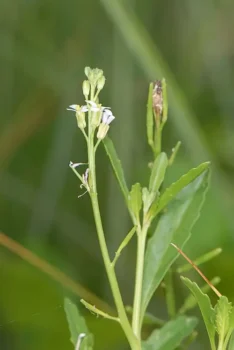
Coastal Searocket: The Perfect Native Plant for Seaside Gardens
If you’re dreaming of a garden that can handle salty air, sandy soil, and the occasional coastal storm, let me introduce you to one of nature’s most resilient native plants: coastal searocket (Cakile lanceolata). This unassuming little charmer might not win any beauty contests, but it’s got the kind of tough-as-nails personality that makes it absolutely indispensable for coastal gardeners.
What Is Coastal Searocket?
Coastal searocket is a native annual herb that belongs to the mustard family. Don’t let the annual part fool you though – this plant has a knack for self-seeding and coming back year after year, almost like it’s got a perennial spirit trapped in an annual body. It’s a forb (essentially a non-woody flowering plant) that stays low to the ground and spreads out in a sprawling mat.
Where Does It Call Home?
This native beauty calls the southeastern United States home, naturally occurring along the coasts of Alabama, Florida, Louisiana, and Texas. It’s also native to Puerto Rico and the U.S. Virgin Islands. You’ll typically find it growing wild on beaches, dunes, and other sandy coastal areas where most plants would throw in the towel.
- Species observed
- No observations
Why Your Garden Will Love Coastal Searocket
Here’s where coastal searocket really shines – it’s basically the superhero of salt-tolerant plants. While other plants are gasping for fresh water, this little trooper actually thrives in salty conditions that would make most garden plants curl up and cry.
The plant produces small, four-petaled flowers that range from white to pale purple. They’re not showy, but they have a delicate charm that’s perfect for naturalized coastal landscapes. The real star of the show, though, is the plant’s succulent-like leaves, which are thick and fleshy – a clever adaptation for storing water in harsh coastal conditions.
Perfect Spots for Planting
Coastal searocket is tailor-made for:
- Coastal and seaside gardens
- Xeriscapes and drought-tolerant landscapes
- Erosion control on slopes and dunes
- Naturalized areas where you want low-maintenance ground cover
- Rock gardens with sandy, well-draining soil
Growing Conditions That Make It Happy
The beauty of coastal searocket is that it’s ridiculously easy to please. It thrives in USDA hardiness zones 8-11 and has some pretty simple requirements:
- Soil: Sandy, well-draining soil is ideal, but it’s not picky about fertility
- Sun: Full sun is best, though it can handle some light shade
- Water: Drought tolerant once established – in fact, too much water can be a problem
- Salt tolerance: Exceptionally high – perfect for coastal conditions
According to wetland classifications, coastal searocket is considered facultative in most regions, meaning it can grow in both wetland and non-wetland conditions. This flexibility makes it incredibly adaptable to different moisture levels in your garden.
Planting and Care Tips
Growing coastal searocket is almost embarrassingly easy:
- Timing: Plant seeds in spring after the last frost
- Spacing: Scatter seeds or space plants about 12 inches apart
- Watering: Water lightly until established, then let nature take over
- Maintenance: Practically none required – this plant is truly low-maintenance
- Self-seeding: Allow some plants to go to seed for natural propagation next year
Benefits for Wildlife and Pollinators
While coastal searocket might look simple, it’s actually a valuable resource for coastal ecosystems. The small flowers attract various pollinators, including native bees and beneficial flies. Birds may also feast on the seeds, making it a nice addition to wildlife-friendly gardens.
The Bottom Line
Coastal searocket isn’t going to win any most beautiful flower awards, but sometimes the best plants are the ones that just quietly do their job without any drama. If you’re dealing with challenging coastal conditions, poor sandy soil, or just want a reliable native plant that takes care of itself, coastal searocket deserves a spot in your garden. It’s the kind of plant that proves sometimes the most valuable garden companions are the ones that ask for nothing and give everything in return.
Plus, there’s something deeply satisfying about growing a plant that your local environment has been supporting for centuries. Your garden – and the local ecosystem – will thank you for choosing this resilient native.