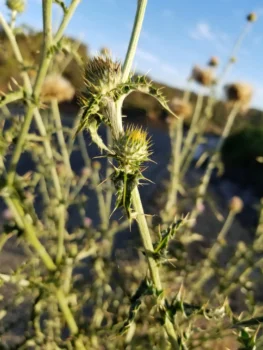
Cobwebby Thistle: A Silvery Native Gem for California Gardens
If you’re looking to add some wild beauty and pollinator appeal to your California garden, meet the cobwebby thistle (Cirsium occidentale var. californicum). Don’t let the word thistle scare you away – this native beauty brings unique texture, stunning flowers, and ecological benefits that make it worth considering for the right garden setting.
What Makes Cobwebby Thistle Special?
This biennial forb gets its charming common name from the distinctive white, cobweb-like hairs that cover its stems and leaves, giving the entire plant a silvery, almost ethereal appearance. The contrast between these silvery stems and the vibrant purple-pink thistle flowers creates a striking visual that’s hard to ignore in the garden.
As a California native, cobwebby thistle has evolved specifically for our Mediterranean climate and plays an important role in supporting local ecosystems. It’s a true wildflower that brings a piece of California’s natural heritage right to your backyard.
Where Does Cobwebby Thistle Grow?
Cobwebby thistle is endemic to California, making it a true Golden State original. You’ll find it naturally growing in coastal and foothill regions throughout the state, where it has adapted to our unique climate conditions.
- Species observed
- No observations
Why Grow Cobwebby Thistle?
Here are compelling reasons to consider adding this native beauty to your landscape:
- Pollinator magnet: The nectar-rich flowers attract butterflies, native bees, and other beneficial insects
- Low maintenance: Once established, it’s drought tolerant and thrives in poor soils
- Unique texture: The silvery, cobwebby appearance adds interesting contrast to other plants
- Supporting natives: You’re helping preserve California’s natural plant heritage
- Conversation starter: Its unusual appearance makes it a fascinating focal point
Garden Design Ideas
Cobwebby thistle works beautifully in several garden styles:
- Native plant gardens: Pairs wonderfully with other California natives like poppies and lupines
- Wildflower meadows: Let it naturalize for a truly wild look
- Pollinator gardens: Essential for supporting local butterfly and bee populations
- Accent planting: Use as a textural element among more traditional plantings
Growing Cobwebby Thistle Successfully
The good news is that cobwebby thistle is relatively easy to grow once you understand its needs:
Climate: Thrives in USDA zones 8-10, perfect for California’s Mediterranean climate
Sunlight: Needs full sun to develop its best form and flowering
Soil: Actually prefers poor to average, well-draining soils – rich garden soil can make it too lush
Water: Drought tolerant once established, but appreciates occasional deep watering during dry spells
Planting and Care Tips
Since cobwebby thistle is a biennial, it completes its life cycle over two years. Here’s how to work with its natural rhythm:
- Seeding: Direct sow seeds in fall for best results
- First year: Plants form a rosette of leaves close to the ground
- Second year: Dramatic flowering stems emerge, bloom, set seed, then die
- Self-seeding: Allow some plants to go to seed to ensure future generations
- Minimal care: Once established, it needs very little intervention
Important Conservation Note
Cobwebby thistle has a conservation status that suggests it may be uncommon in some areas. If you decide to grow it, please source your seeds or plants from reputable native plant nurseries that collect responsibly. Never collect from wild populations.
Is Cobwebby Thistle Right for Your Garden?
Consider cobwebby thistle if you:
- Want to support native California wildlife
- Enjoy plants with unique textures and forms
- Have a naturalized or wildflower garden style
- Appreciate low-maintenance, drought-tolerant plants
- Want to attract butterflies and native bees
Skip it if you prefer highly manicured gardens or live outside of California, where other native thistles would be more appropriate choices.
Cobwebby thistle might not be the most conventional choice, but for gardeners who appreciate California’s wild beauty and want to support local ecosystems, it’s a fascinating addition that brings both ecological value and unique visual appeal to the landscape.