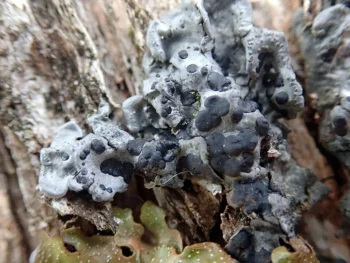
Coccocarpia Lichen: A Fascinating Natural Garden Visitor
Have you ever noticed peculiar crusty or leafy patches growing on tree bark in your garden and wondered what they might be? If you live in the southeastern United States, you might be looking at coccocarpia lichen (Coccocarpia erythroxyli), a fascinating organism that’s neither plant nor animal, but something entirely unique.
What Exactly Is Coccocarpia Lichen?
Coccocarpia lichen is actually a remarkable partnership between a fungus and an algae living together in perfect harmony. This symbiotic relationship creates what we see as a lichen – those interesting patches that appear on tree bark throughout the warmer regions of North America. It’s also known by its scientific synonyms Coccocarpia incisa and Coccocarpia parmelioides, but don’t let the fancy names intimidate you!
Where You’ll Find This Native Beauty
This native North American lichen calls the southeastern United States home, thriving particularly well in Florida and along the Gulf Coast states. It loves the warm, humid conditions that these regions provide, making it perfectly adapted to life in USDA hardiness zones 8-10.
Spotting Coccocarpia Lichen in Your Garden
Identifying coccocarpia lichen is easier than you might think! Here’s what to look for:
- Crusty or leafy patches growing directly on tree bark
- Grayish-green to brownish coloration
- Typically found on the bark of various trees and shrubs
- Appears in humid, shaded areas of your landscape
Is It Beneficial to Have in Your Garden?
Absolutely! While you can’t plant or cultivate coccocarpia lichen (it simply shows up on its own when conditions are right), having it in your garden is actually a wonderful sign. Here’s why:
- Air quality indicator: Lichens are sensitive to air pollution, so their presence suggests you have clean, healthy air in your garden
- Ecosystem health: They contribute to the overall biodiversity of your landscape
- No harm to trees: Unlike parasites, lichens don’t damage their host trees – they simply use the bark as a place to live
- Natural beauty: They add interesting textures and subtle colors to tree bark
The Hands-Off Approach
Here’s the thing about coccocarpia lichen – you can’t really grow it in the traditional gardening sense. It appears naturally when environmental conditions are just right, including adequate humidity, clean air, and suitable host trees. The best thing you can do is:
- Maintain a healthy, diverse landscape with native trees
- Avoid using harsh chemicals that might affect air quality
- Keep your garden naturally humid through appropriate plant choices
- Simply appreciate it when it appears!
A Living Partnership Worth Celebrating
The next time you spot those grayish-green patches on your trees, take a moment to appreciate the amazing partnership you’re witnessing. Coccocarpia lichen represents millions of years of evolutionary cooperation, turning your garden into a living laboratory of natural symbiosis. While you can’t plant it or control where it grows, its presence is a testament to the health and balance of your outdoor space – and that’s something worth celebrating!