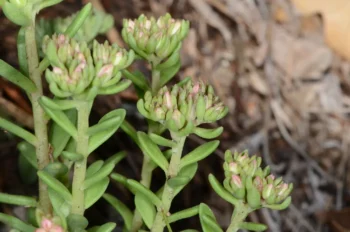
Cockerell’s Stonecrop: A Hardy Native Succulent for Southwestern Gardens
If you’re looking for a tough-as-nails native plant that laughs in the face of drought and still manages to look charming, let me introduce you to Cockerell’s stonecrop (Sedum cockerellii). This little southwestern gem proves that sometimes the best things come in small, succulent packages.
What Is Cockerell’s Stonecrop?
Cockerell’s stonecrop is a native perennial succulent that belongs to the diverse Sedum family. As a forb—basically a fancy way of saying it’s an herbaceous plant without woody stems—this little trooper stores water in its thick, fleshy leaves to survive in some pretty challenging conditions. You might occasionally see it listed under its scientific synonyms like Sedum griffithsii or Sedum wootonii, but don’t let the name variations confuse you—it’s the same reliable plant.
Where Does It Call Home?
This stonecrop is a true child of the American Southwest, naturally occurring across Arizona, New Mexico, and Texas. It’s perfectly adapted to the hot, dry conditions that make many other plants wilt and give up. Being native to these regions means it’s already equipped to handle whatever Mother Nature throws its way.
- Species observed
- No observations
Why Your Garden Will Love This Plant
Cockerell’s stonecrop brings several compelling qualities to the table:
- Drought tolerance: Once established, this plant can handle extended dry periods without batting an eye
- Low maintenance: Perfect for busy gardeners or those who prefer a plant it and forget it approach
- Pollinator friendly: Its small, star-shaped white or pink flowers attract bees and butterflies
- Year-round interest: As a perennial, it provides structure and texture throughout the growing season
- Native benefits: Supports local ecosystems and requires fewer resources than non-native alternatives
Perfect Garden Roles
This versatile little succulent shines in several landscape situations:
- Rock gardens where it can nestle between stones
- Xerophytic or desert-themed landscapes
- Ground cover in areas where grass struggles
- Succulent collections and container gardens
- Low-water landscape designs
Growing Conditions and Care
Cockerell’s stonecrop is wonderfully adaptable and thrives in USDA hardiness zones 5-9. Here’s what it needs to flourish:
Light: Full sun to partial shade, though it performs best with plenty of sunshine
Soil: Well-draining soil is absolutely crucial. This plant would rather be too dry than too wet, so avoid heavy clay or areas where water tends to pool
Water: Minimal watering once established. During its first growing season, provide occasional deep watering to help it establish roots, then step back and let nature take over
The Golden Rule: When in doubt, underwater rather than overwater. Root rot is this plant’s biggest enemy, and soggy soil is a sure way to lose your stonecrop
Planting and Care Tips
Getting started with Cockerell’s stonecrop is refreshingly straightforward:
- Plant in spring or fall when temperatures are moderate
- Ensure excellent drainage by amending heavy soils with sand or gravel
- Space plants according to their mature size to allow for air circulation
- Avoid fertilizing—this plant prefers lean conditions
- Remove spent flowers if desired, though they often add winter interest
- Divide clumps every few years if they become overcrowded
The Bottom Line
Cockerell’s stonecrop is an excellent choice for gardeners who want to embrace native plants while creating beautiful, low-maintenance landscapes. It’s particularly valuable in southwestern regions where water conservation is important and extreme weather conditions rule out many other options. This little succulent proves that native doesn’t have to mean boring—sometimes it just means perfectly adapted and wonderfully reliable.
Whether you’re creating a full xerophytic garden or just looking for that perfect plant to fill a challenging sunny spot, Cockerell’s stonecrop deserves a place on your consideration list. Your local pollinators—and your water bill—will thank you.