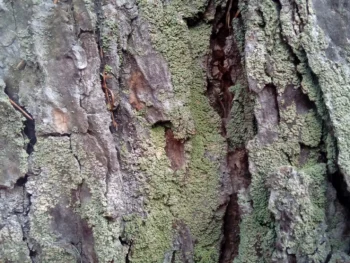
Cockleshell Lichen: A Tiny Natural Wonder in Your Garden
Have you ever noticed small, crusty patches on tree bark and wondered what they were? Meet the cockleshell lichen (Hypocenomyce scalaris), one of North America’s fascinating native lichens that might already be calling your garden home without you even knowing it!
What Exactly is Cockleshell Lichen?
Don’t let the name fool you – cockleshell lichen isn’t actually a plant at all! It’s a lichen, which is a remarkable partnership between a fungus and algae (or sometimes cyanobacteria) working together in perfect harmony. This tiny organism represents one of nature’s most successful collaborations, where the fungus provides structure and protection while the algae produces food through photosynthesis.
Cockleshell lichen is native to North America and can be found across a wide range of climates, typically thriving in USDA hardiness zones 2 through 8. This hardy little organism has been quietly colonizing tree bark for centuries, serving as a natural indicator of environmental health.
Spotting Cockleshell Lichen in Your Landscape
Identifying cockleshell lichen is easier than you might think once you know what to look for:
- Small, crusty patches that appear whitish to pale gray
- Dark, button-like fruiting bodies (called apothecia) that give it the cockleshell appearance
- Grows primarily on the bark of both deciduous and coniferous trees
- Forms irregular, spreading patches rather than distinct shapes
- Texture appears somewhat rough or granular up close
Is Cockleshell Lichen Good for Your Garden?
Absolutely! While you can’t exactly plant cockleshell lichen like you would a flower or shrub, its presence in your garden is actually a wonderful sign. Here’s why you should be happy to discover it:
Air Quality Indicator: Lichens are incredibly sensitive to air pollution, so finding cockleshell lichen in your garden means you have relatively clean air – a great sign for both you and your plants!
Ecosystem Support: Though small, lichens contribute to biodiversity and provide food for various insects and small creatures. They’re part of the complex web of life that makes a healthy garden ecosystem.
No Harm to Trees: Unlike some organisms that grow on trees, lichens don’t damage their hosts. They simply use the bark as a place to live, getting their nutrients from the air and rain.
Creating Lichen-Friendly Conditions
While you can’t plant cockleshell lichen directly, you can create conditions that welcome it to your landscape:
- Maintain good air quality by avoiding excessive use of chemicals and pesticides
- Keep mature trees in your landscape – lichens prefer established bark surfaces
- Avoid excessive pruning or bark cleaning, which can disturb existing lichen communities
- Be patient – lichens grow very slowly and may take years to establish
A Living Partnership Worth Celebrating
The next time you’re strolling through your garden, take a closer look at your trees. Those small, crusty patches you might have overlooked could be cockleshell lichen – a testament to the clean air and healthy ecosystem you’ve cultivated. Rather than something to remove, consider them tiny badges of honor that show your garden is supporting the incredible diversity of life that makes our natural world so fascinating.
Remember, good things come in small packages, and cockleshell lichen is proof that some of nature’s most interesting residents are also some of the tiniest!