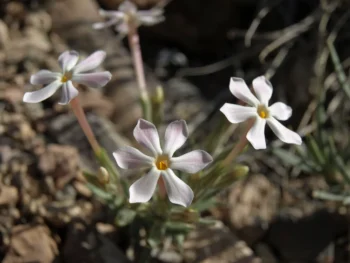
Cold-Desert Phlox: A Fragrant Native Gem for Water-Wise Gardens
If you’re looking for a tough, beautiful native plant that can handle challenging conditions while providing sweet fragrance and pollinator appeal, let me introduce you to cold-desert phlox (Phlox stansburyi stansburyi). This little powerhouse might just become your new favorite low-maintenance garden companion.
What Makes Cold-Desert Phlox Special?
Cold-desert phlox is a native perennial that perfectly embodies the small but mighty philosophy. This low-growing shrub stays compact, typically under 1.5 feet tall and never exceeding 3 feet at maturity. Don’t let its modest size fool you – this plant packs serious visual and ecological punch.
In spring, clusters of small, tubular flowers in shades of pink to lavender emerge, releasing a delightful fragrance that will have you stopping in your tracks during garden strolls. The needle-like evergreen foliage provides year-round structure and interest, making this plant a four-season performer.
Where Does It Call Home?
This hardy native is right at home across the American Southwest, naturally occurring in Arizona, California, Nevada, New Mexico, Texas, and Utah. It’s perfectly adapted to the challenging conditions of these regions, which means it can handle whatever your garden throws at it.
- Species observed
- No observations
Why Your Garden (and Local Wildlife) Will Love It
Cold-desert phlox is like a magnet for beneficial insects. Butterflies, moths, and native bees absolutely adore the nectar-rich flowers, making this plant an excellent choice for pollinator gardens. By choosing this native species, you’re supporting local ecosystems while creating a beautiful landscape.
From a design perspective, cold-desert phlox shines in several roles:
- Ground cover for slopes or difficult areas
- Rock garden specimen plant
- Border edging with year-round appeal
- Mass plantings for low-maintenance landscapes
Perfect Garden Matches
This adaptable native thrives in:
- Xeriscape and drought-tolerant gardens
- Desert-themed landscapes
- Rock and gravel gardens
- Native plant collections
- Low-water commercial landscapes
Growing Conditions That Make It Happy
Cold-desert phlox is refreshingly undemanding. Here’s what it prefers:
- Sunlight: Full sun for best flowering and compact growth
- Soil: Well-draining sandy or rocky soil (clay soil is its nemesis!)
- Water: Drought-tolerant once established; actually prefers dry conditions
- Hardiness: Thrives in USDA zones 4-9
Planting and Care Tips
The best time to plant cold-desert phlox is fall or early spring when temperatures are moderate. Here’s how to set it up for success:
Planting: Choose a sunny spot with excellent drainage. If your soil holds water, consider planting on a slope or in raised beds. Amend heavy clay soils with coarse sand or gravel to improve drainage.
Watering: Water regularly the first growing season to help establish roots, then back off significantly. This plant actually suffers from too much kindness – overwatering is more likely to kill it than drought.
Maintenance: Minimal pruning needed. You can lightly trim after flowering to maintain shape, but it’s not necessary. This is truly a plant it and enjoy it species.
The Bottom Line
Cold-desert phlox proves that native plants don’t require sacrifice when it comes to beauty or garden performance. With its fragrant flowers, evergreen foliage, pollinator benefits, and rock-solid reliability in tough conditions, it’s an excellent choice for gardeners who want maximum impact with minimal input.
Whether you’re creating a water-wise landscape, supporting local wildlife, or simply want a beautiful plant that won’t demand constant attention, cold-desert phlox delivers on all fronts. Give this native gem a try – your garden (and your local butterflies) will thank you!