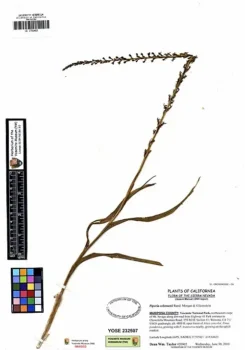
Coleman’s Piperia: A Rare California Native Orchid for Specialized Gardens
If you’re looking for a garden plant that will have your neighbors asking What’s that delicate white flower spike?, Coleman’s piperia might just be your answer – though fair warning, this isn’t your typical garden center find! This native California orchid is as elusive in cultivation as it is beautiful in the wild.
Meet Coleman’s Piperia
Coleman’s piperia (Piperia colemanii) is a perennial forb that belongs to the orchid family. Despite being a native California treasure, it’s one of those plants that prefers to keep a low profile. As a forb, it lacks woody stems and produces all its magic from ground level, sending up elegant flower spikes that seem to appear like botanical ghosts in late summer.
Where You’ll Find This California Native
This special orchid calls California home, and only California. It’s found scattered throughout various regions of the Golden State, from coastal ranges to some inland areas. However, don’t expect to stumble upon it during your next hiking trip – Coleman’s piperia has earned a Global Conservation Status of S3, meaning it’s considered vulnerable throughout its range.
- Species observed
- No observations
Why Consider (or Reconsider) Growing Coleman’s Piperia
Before you get too excited about adding this native beauty to your garden, let’s have an honest conversation about what you’re getting into.
The Appeal
- Unique native orchid that supports California’s biodiversity
- Delicate white to greenish-white flowers create an ethereal garden moment
- Tall, slender flower spikes add vertical interest to naturalized areas
- Attracts specialized pollinators, likely including nocturnal moths
- Perfect conversation starter for native plant enthusiasts
The Reality Check
- Extremely difficult to grow and establish
- Requires specific soil fungi (mycorrhizae) to survive
- Limited availability due to conservation status
- Not suitable for typical landscaping applications
- May disappear for years underground before re-emerging
Garden Role and Landscape Fit
Coleman’s piperia isn’t going to anchor your front yard flower bed or provide reliable seasonal color. Instead, think of it as the botanical equivalent of a rare art piece – it’s for specialized native plant gardens, orchid collections, or naturalized woodland areas where you’re trying to recreate California’s native ecosystem.
This orchid thrives in zones 8-10, which fortunately aligns with much of California’s climate. It prefers partial shade and well-draining soils, but the real challenge is providing the complex underground ecosystem it needs to flourish.
The Conservation Conversation
Here’s where we need to pump the brakes a bit. With its vulnerable conservation status, Coleman’s piperia isn’t something you should casually order online or dig up from the wild (which is illegal and harmful). If you’re determined to grow this orchid, you must source it responsibly from reputable native plant nurseries that propagate it ethically.
Many experts actually recommend supporting conservation efforts and enjoying this species in its natural habitat rather than attempting cultivation. Sometimes the best way to love a plant is to let it thrive where it belongs.
Growing Tips for the Brave
If you’ve decided to take on this challenge with responsibly sourced plants, here’s what you need to know:
- Provide well-draining, slightly acidic soil
- Ensure partial shade conditions
- Never disturb the soil around established plants
- Avoid fertilizers and soil amendments
- Be patient – orchids can take years to establish and may go dormant for extended periods
- Consider it a long-term relationship, not a quick garden fix
The Bottom Line
Coleman’s piperia is a fascinating native orchid that represents the subtle beauty of California’s flora. While it’s not practical for most gardens, it offers a unique opportunity for dedicated native plant enthusiasts willing to embrace both its beauty and its challenges. Just remember – with great botanical rarity comes great responsibility. If you choose to grow it, do so thoughtfully and sustainably.
For most gardeners interested in supporting California natives, consider exploring more readily available native orchids or other indigenous plants that can provide similar ecological benefits without the conservation concerns. Your local native plant society can point you toward beautiful alternatives that are easier to grow and more readily available.