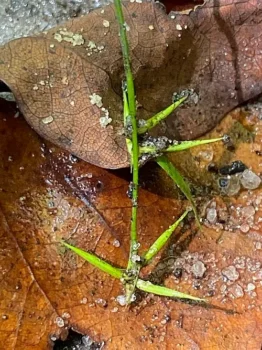
Collins’ Sedge: Your Go-To Native Plant for Wet Spots
If you’ve got a soggy corner of your yard that makes you scratch your head every spring, meet your new best friend: Collins’ sedge (Carex collinsii). This unassuming native sedge might not win any beauty contests, but it’s the reliable workhorse your wetland garden has been waiting for.
What Exactly Is Collins’ Sedge?
Collins’ sedge is a perennial grass-like plant that belongs to the sedge family (Cyperaceae). Don’t let the grass-like description fool you into thinking it’s just another lawn substitute – this little powerhouse is specifically designed by nature to thrive where regular grasses would throw in the towel.
As a native species to the lower 48 states, Collins’ sedge has earned its stripes in the American landscape. You’ll find it naturally growing across a impressive range of states including Alabama, Connecticut, Delaware, Georgia, Maryland, New Jersey, New York, North Carolina, Pennsylvania, Rhode Island, South Carolina, Tennessee, and Virginia.
- Species observed
- No observations
Why Your Garden Needs This Wetland Wonder
Here’s where Collins’ sedge really shines: it’s what botanists call an obligate wetland plant across multiple regions. In plain English? This plant almost always occurs in wetlands, whether you’re in the Atlantic and Gulf Coastal Plain, Eastern Mountains and Piedmont, or Northcentral and Northeast regions.
This wetland status isn’t just a fun fact – it’s your ticket to solving those troublesome wet areas in your landscape. While other plants might sulk or rot in consistently moist conditions, Collins’ sedge actually prefers them.
The Perfect Spots for Collins’ Sedge
Collins’ sedge is your go-to choice for:
- Rain gardens that capture stormwater runoff
- Bog gardens and wetland restoration projects
- Areas with poor drainage that stay consistently moist
- Naturalized landscapes where you want authentic native character
- Erosion control along streams or pond edges
Growing Collins’ Sedge Successfully
The beauty of Collins’ sedge lies in its simplicity. This hardy perennial thrives in USDA zones 5-9, making it suitable for most temperate gardens. Here’s how to keep it happy:
Light Requirements: Collins’ sedge is quite flexible, tolerating everything from full sun to partial shade. In hotter climates, it appreciates some afternoon protection.
Soil Needs: The key word here is moist. This sedge demands consistently wet to moist soils and won’t forgive you for letting it dry out completely. It prefers acidic to neutral pH levels.
Planting Tips: Spring is your best bet for establishing new plants. Space them about 12-18 inches apart if you’re creating a mass planting, though Collins’ sedge will naturally form small clumps over time.
Care and Maintenance
Once established, Collins’ sedge is refreshingly low-maintenance. The most important rule? Keep it consistently moist. Beyond that, you’re mostly hands-off. You can cut it back in late winter if you prefer a tidy appearance, but many gardeners leave it standing for winter interest and wildlife habitat.
Wildlife and Ecological Benefits
While Collins’ sedge won’t attract clouds of butterflies (sedges are wind-pollinated rather than insect-pollinated), it serves the ecosystem in other important ways. The seeds provide food for various bird species, and the dense growth habit offers shelter for small wildlife. Plus, by choosing native plants like Collins’ sedge, you’re supporting the local ecosystem that co-evolved with these species.
Is Collins’ Sedge Right for Your Garden?
Collins’ sedge isn’t the flashiest plant in the nursery, but it’s absolutely invaluable if you have wet areas that need reliable, native plant coverage. It’s particularly perfect for gardeners who want to create authentic wetland habitats or need practical solutions for challenging drainage issues.
The main consideration is moisture – this plant simply won’t work in dry, well-drained soils. But if you’ve got the wet conditions it craves, Collins’ sedge will reward you with years of trouble-free performance and the satisfaction of supporting native wildlife.
Sometimes the best garden plants are the ones that simply do their job well, year after year. Collins’ sedge is exactly that kind of reliable garden citizen.