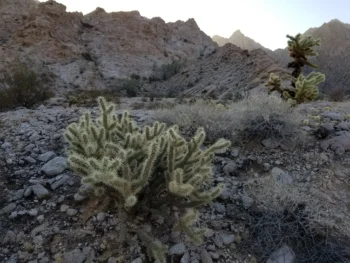
Colorado Buckhorn Cholla: A Spiny Southwestern Beauty for Water-Wise Gardens
If you’re looking to add some authentic southwestern flair to your drought-tolerant garden, the Colorado buckhorn cholla might just be your new favorite desert dweller. This distinctive cactus brings both beauty and low-maintenance appeal to xeriscaped landscapes across the American Southwest.
Meet the Colorado Buckhorn Cholla
The Colorado buckhorn cholla (Cylindropuntia acanthocarpa var. coloradensis) is a native perennial shrub that’s perfectly adapted to life in some of America’s most challenging climates. This multi-stemmed woody cactus typically grows to heights of 13-16 feet, though it usually stays more compact in garden settings.
You might also see this plant listed under its scientific synonym, Opuntia acanthocarpa var. coloradensis, but don’t let the name changes confuse you – it’s the same wonderfully spiny character.
Where It Calls Home
This native beauty naturally grows across four southwestern states: Arizona, California, Nevada, and Utah. It’s perfectly adapted to the hot, dry conditions of the Sonoran and Mojave deserts, making it an excellent choice for gardeners in these regions who want to work with nature rather than against it.
- Species observed
- No observations
Why Gardeners Love (and Sometimes Fear) This Cactus
Let’s be honest – the Colorado buckhorn cholla isn’t for everyone, and that’s okay! Here’s what makes it special and what you should consider:
The Good Stuff:
- Stunning yellow flowers that bloom in spring and summer, attracting bees and other desert pollinators
- Incredibly drought-tolerant once established – perfect for water-wise landscaping
- Authentic native plant that supports local ecosystems
- Low maintenance requirements (almost neglect-friendly!)
- Architectural interest with its segmented, branching structure
- Colorful spines that add visual texture year-round
The Challenging Bits:
- Those spines are no joke – this plant demands respect and careful placement
- Not suitable for high-traffic areas or homes with small children and pets
- Limited to warmer climates (USDA zones 8-11)
- Can be slow-growing, requiring patience
Perfect Garden Roles
The Colorado buckhorn cholla shines in specific landscape settings:
- Desert and xeriscape gardens as a dramatic accent plant
- Rock gardens where it can show off against stone backdrops
- Native plant gardens focusing on southwestern flora
- Large containers for patios (with careful placement!)
- Security landscaping where you want to discourage foot traffic
Growing Your Own Colorado Buckhorn Cholla
Location, Location, Location
Choose a spot that gets full sun – this cactus loves basking in intense sunlight all day long. Make sure it’s well away from walkways, play areas, and anywhere people might accidentally brush against it.
Soil Requirements
The most important thing? Drainage, drainage, drainage! This plant absolutely cannot tolerate wet feet. Sandy, rocky, or gravelly soils work best. If you have clay soil, consider building a raised bed or large mound with added sand and gravel.
Watering Wisdom
Here’s where many gardeners go wrong with cacti – they kill them with kindness. Once established, your Colorado buckhorn cholla needs very little water. During its first year, water deeply but infrequently. After that, natural rainfall should be sufficient in most areas, with occasional supplemental watering during extreme drought periods.
Planting Tips
- Plant in spring or fall when temperatures are milder
- Wear heavy gloves and use tools to handle the plant
- Dig a hole just as deep as the root ball and twice as wide
- Backfill with native soil mixed with extra sand or gravel for drainage
- Water lightly after planting, then let it settle in
Conservation Considerations
With a conservation status of S4T3T4, the Colorado buckhorn cholla isn’t critically endangered, but it’s worth being mindful about sourcing. Always purchase from reputable nurseries that propagate their plants rather than wild-collecting. This helps protect wild populations while giving you a healthier, nursery-grown specimen.
Is This Plant Right for You?
The Colorado buckhorn cholla is perfect for gardeners who:
- Live in USDA zones 8-11
- Want authentic native plants in their landscape
- Are committed to water-wise gardening
- Appreciate unique architectural plants
- Have space for a plant that needs respectful distance
- Want to support native pollinators
However, you might want to pass if you have small children, curious pets, or limited space where the plant might become a hazard.
When grown in the right conditions and respected for what it is, the Colorado buckhorn cholla becomes a striking centerpiece that connects your garden to the authentic character of the American Southwest. Just remember – this is one plant where keeping your distance is part of the appreciation!