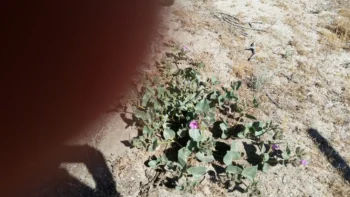
Colorado Four O’Clock: A Southwestern Native with Desert Charm
If you’re looking to add some authentic southwestern flair to your garden, the Colorado four o’clock (Mirabilis multiflora var. pubescens) might just be the native plant you’ve been searching for. This hardy perennial brings a touch of wild desert beauty right to your backyard, and it’s perfectly adapted to life in some of America’s most challenging climates.
What Makes Colorado Four O’Clock Special?
The Colorado four o’clock is a fascinating member of the four o’clock family, scientifically known as Mirabilis multiflora var. pubescens. As a forb herb, it’s what botanists call a vascular plant without significant woody tissue—think of it as the desert’s answer to your garden’s flowering perennials, but much tougher!
This particular variety has some interesting botanical history too. You might occasionally see it listed under its synonyms Mirabilis froebelii or Mirabilis froebelii var. glabrata in older gardening references, but don’t let that confuse you—it’s all the same resilient plant.
Where Does It Call Home?
This native beauty is truly a child of the American Southwest. You’ll find Colorado four o’clock naturally thriving across four states: Arizona, California, Nevada, and Utah. It’s perfectly at home in the desert landscapes and arid regions that define this part of the country, making it an excellent choice for gardeners in these areas who want to work with nature rather than against it.
- Species observed
- No observations
Why Consider Colorado Four O’Clock for Your Garden?
There are several compelling reasons to give this native plant a spot in your landscape:
- True native credentials: As a plant native to the lower 48 states, it supports local ecosystems
- Low maintenance potential: Desert natives are typically drought-tolerant once established
- Authentic regional character: Perfect for xeriscaping and desert-themed gardens
- Perennial nature: Comes back year after year with proper care
The Challenge: Limited Growing Information
Here’s where we need to be honest with you—specific growing information for this particular variety of Colorado four o’clock is surprisingly limited in readily available sources. While we know it’s a hardy southwestern native, detailed care instructions, specific pollinator benefits, and exact growing requirements for Mirabilis multiflora var. pubescens are not well-documented in standard gardening resources.
What We Do Know
Based on its native range and plant classification, we can make some educated assumptions about Colorado four o’clock:
- It’s likely adapted to arid conditions and poor soils
- As a desert native, it probably requires excellent drainage
- It should be hardy in the climate zones of its native range (Arizona, California, Nevada, Utah)
- Like other four o’clocks, it may have interesting bloom timing (many open in late afternoon)
Growing Tips and Recommendations
If you’re interested in growing Colorado four o’clock, here’s our best advice:
- Source carefully: Look for native plant nurseries in the Southwest that specialize in regional flora
- Consult local experts: Contact your local native plant society or extension office for region-specific growing advice
- Start small: Try one plant first to learn its specific needs in your garden
- Observe wild populations: If you’re in its native range, notice where it grows naturally for habitat clues
The Bottom Line
Colorado four o’clock represents an intriguing opportunity for southwestern gardeners to grow a true regional native. While specific cultivation information may be limited, its status as a native perennial makes it worth investigating further. If you’re passionate about native plants and willing to do some experimentation, this could be a rewarding addition to your desert garden.
Just remember to source your plants responsibly from reputable native plant suppliers, and don’t be afraid to reach out to local gardening communities for their experiences with this unique southwestern native.