Colorado Rush: A Hardy Native Grass for Wet Spots in Your Garden
If you’ve got a soggy spot in your yard that seems to defy most plants, meet your new best friend: Colorado rush (Juncus confusus). This unassuming native grass might not win any beauty contests, but it’s exactly what you need for those challenging wet areas where other plants fear to tread.
What is Colorado Rush?
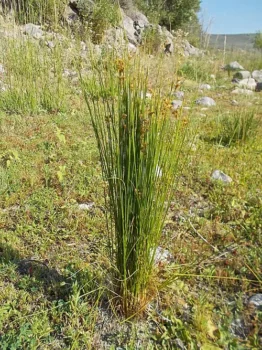
Colorado rush is a perennial grass-like plant that’s part of the rush family (Juncaceae). Don’t let the grass-like description fool you into thinking it’s just another lawn substitute – this plant has its own unique charm and purpose. Growing in neat bunches with fine-textured green foliage, it reaches a modest height of about 1.5 feet and maintains an upright, erect form that adds subtle vertical interest to wet areas.
You might also encounter this plant under its former scientific name, Juncus exilis, but Juncus confusus is the current accepted name. Despite its species name suggesting confusion, there’s nothing confusing about what this plant brings to the table!
Where Colorado Rush Calls Home
This hardy native has quite an impressive range across North America. You’ll find Colorado rush naturally growing throughout much of western North America, from the Canadian provinces of Alberta, British Columbia, and Saskatchewan, down through the western United States including Arizona, California, Colorado, Idaho, Montana, Nevada, New Mexico, Oregon, South Dakota, Utah, Washington, and Wyoming.
- Species observed
- No observations
Why You Might Want Colorado Rush in Your Garden
Let’s be honest – Colorado rush isn’t going to stop traffic with showy flowers or brilliant fall color. Its brown, inconspicuous flowers bloom in late summer, and its foliage stays a practical green throughout the growing season. So why would you want it?
- Problem solver extraordinaire: Got a wet, boggy area where nothing else will grow? Colorado rush thrives in these conditions.
- Native plant champion: Supporting local ecosystems by choosing native plants is always a win.
- Low maintenance: Once established, it pretty much takes care of itself.
- Erosion control: Those roots work hard to stabilize soil in wet areas.
- Wildlife habitat: While not flashy, it provides cover and nesting material for various creatures.
Perfect Garden Situations for Colorado Rush
Colorado rush shines in specific garden scenarios:
- Rain gardens: Ideal for managing stormwater runoff
- Pond edges: Creates natural-looking transitions around water features
- Wetland restoration projects: Essential for recreating natural wet meadow communities
- Native plant gardens: Adds authentic local flora to your landscape
- Problem wet spots: Those areas where your lawn keeps dying due to standing water
Growing Conditions: What Colorado Rush Craves
The good news is that Colorado rush isn’t particularly fussy, as long as you meet its basic needs:
Moisture: This plant has high moisture requirements and low drought tolerance. Think consistently moist to wet rather than occasional watering.
Soil: Remarkably adaptable to different soil textures – whether you have clay, sand, or something in between, Colorado rush can work with it. It prefers a pH between 6.0 and 8.0.
Light: Intermediate shade tolerance means it can handle full sun to partial shade, making it versatile for different garden locations.
Climate: Hardy in USDA zones 3-8, this plant can handle temperatures as low as -38°F and needs at least 85 frost-free days per year.
Planting and Care Tips
Getting Colorado rush established is refreshingly straightforward:
Planting: You can start with bare root plants, seeds, or sprigs. The plant is routinely available commercially, though seed abundance is typically low. If starting from seed, don’t expect rapid results – seedling vigor is low, so patience is key.
Spacing: Plan for about 4,800 to 11,000 plants per acre if you’re doing a large-scale planting, but for home gardens, space individual clumps about 1-2 feet apart.
Establishment: Keep the soil consistently moist during the first growing season. The active growth period is spring and summer, with moderate growth rate once established.
Maintenance: Here’s the beautiful part – Colorado rush is remarkably low-maintenance. It doesn’t require fertilizer (medium fertility requirement means average garden soil is fine), and it has high fire tolerance if you’re in a fire-prone area.
Special Considerations
Colorado rush has some unique characteristics worth noting. Its wetland status varies by region – in some areas, it’s considered facultative (can grow in wet or dry conditions), while in others, it’s facultative wetland (usually found in wet areas). This flexibility makes it valuable for transitional zones between wet and dry areas in your landscape.
While it won’t spread aggressively (vegetative spread rate is essentially none), established clumps will slowly expand over time. The plant doesn’t fix nitrogen, so it won’t improve soil fertility, but it also won’t compete aggressively with neighboring plants for nutrients.
The Bottom Line
Colorado rush might not be the showstopper of your garden, but it’s the reliable workhorse that solves problems other plants can’t handle. If you have consistently wet areas, want to support native plant communities, or need something for erosion control near water features, Colorado rush deserves a spot on your plant list. It’s proof that sometimes the most valuable garden plants are the ones that simply do their job well, year after year, without any fuss.