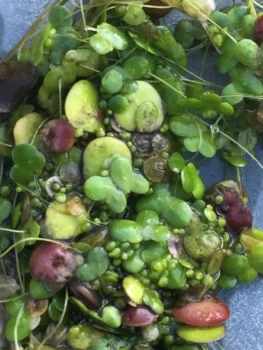
Columbian Watermeal: The World’s Tiniest Native Aquatic Plant
Meet Columbian watermeal (Wolffia columbiana), quite possibly the most overlooked native plant in North America – and for good reason! This microscopic marvel is so small you might mistake it for algae floating on your pond’s surface. But don’t let its diminutive size fool you; this little green speck packs quite a punch when it comes to aquatic gardening.
What Exactly Is Columbian Watermeal?
Columbian watermeal is a perennial aquatic forb that holds the distinction of being one of the world’s smallest flowering plants. Each individual plant measures just 0.5 to 1.5 millimeters – smaller than a pinhead! These tiny green ovals float freely on the water’s surface, often forming dense mats that can cover entire ponds.
As a true native plant, Columbian watermeal naturally occurs throughout most of North America, making it an excellent choice for gardeners interested in supporting local ecosystems. The plant is classified as an obligate wetland species across all regions, meaning it almost always occurs in wetland environments.
Where Does It Grow?
This remarkable little plant has one of the most extensive native ranges of any North American aquatic species. You can find Columbian watermeal growing naturally from coast to coast, including in these states and provinces: Alberta, Alabama, British Columbia, Manitoba, New Brunswick, Arkansas, California, Ontario, Colorado, Connecticut, Quebec, Delaware, Saskatchewan, District of Columbia, Florida, Georgia, Illinois, Indiana, Iowa, Kansas, Kentucky, Louisiana, Maine, Maryland, Massachusetts, Michigan, Minnesota, Mississippi, Missouri, Montana, Nebraska, New Hampshire, New Jersey, New York, North Carolina, North Dakota, Ohio, Oklahoma, Oregon, Pennsylvania, South Carolina, South Dakota, Tennessee, Texas, Vermont, Virginia, West Virginia, and Wisconsin.
- Species observed
- No observations
Should You Plant Columbian Watermeal?
Here’s where things get interesting. Columbian watermeal isn’t your typical garden center purchase, and that’s perfectly fine! This specialized native plant serves specific purposes that might appeal to certain types of gardeners:
Why You Might Want It:
- It’s a true native species that supports local aquatic ecosystems
- Provides natural water filtration by absorbing nutrients
- Creates habitat for tiny aquatic organisms
- Requires virtually no maintenance once established
- Thrives in USDA hardiness zones 3-11
- Fascinating conversation starter for visitors to your water garden
Why You Might Skip It:
- Barely visible without close inspection
- Can form dense mats that some find unsightly
- Offers minimal aesthetic appeal compared to water lilies or lotus
- Limited pollinator benefits due to microscopic flowers
- May be difficult to source from nurseries
Perfect for Specialized Water Gardens
Columbian watermeal shines in natural-style water features, wildlife ponds, and bog gardens where the goal is ecological function over ornamental appeal. It pairs well with larger aquatic natives like cattails, arrowhead, and water lilies, providing a complete aquatic ecosystem in miniature.
This plant is ideal for gardeners who appreciate the subtle beauty of native ecosystems and want to create habitat for wildlife, even if that wildlife consists of microscopic organisms you’ll never see!
Growing Conditions and Care
The beauty of Columbian watermeal lies in its simplicity. Here’s what this tiny native needs to thrive:
- Water requirements: Still or very slow-moving freshwater
- Light needs: Full sun to partial shade
- Water depth: Floats on the surface of any depth
- Soil: Not applicable – this is a free-floating plant
- Nutrients: Thrives in nutrient-rich water
- pH tolerance: Adaptable to most freshwater conditions
Planting and Maintenance Tips
If you’re lucky enough to find Columbian watermeal (perhaps from a specialized aquatic nursery or a generous fellow water gardener), establishing it is refreshingly simple:
- Simply place the plants on your pond’s surface – no planting required!
- Ensure your water feature has minimal water movement
- Avoid using chemicals or treatments that might harm aquatic plants
- Allow natural reproduction through vegetative division
- In colder climates, plants may die back in winter but often return from dormant buds
Maintenance? What maintenance! Once established, Columbian watermeal asks for nothing except clean water and patience as it slowly establishes its floating colonies.
The Bottom Line
Columbian watermeal won’t win any beauty contests, but it’s a fascinating native plant that deserves consideration for specialized aquatic gardens. If you’re creating a natural pond ecosystem or want to support native biodiversity in every possible niche, this microscopic marvel might just be the perfect addition to your water garden. Just remember to bring a magnifying glass if you want to truly appreciate your new green residents!