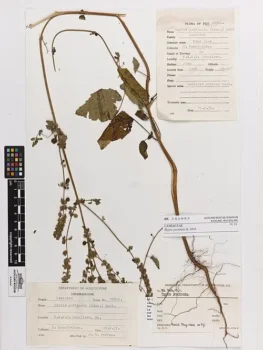
Comb Bushmint: A Fragrant Herb for Warm Climate Gardens
If you’re looking for an aromatic addition to your warm climate garden, comb bushmint (Hyptis pectinata) might just catch your attention. Also known as comb hyptis, this perennial herb brings a unique fragrance and subtle beauty to landscapes where it can thrive. But before you add it to your shopping list, let’s explore what makes this plant tick and whether it’s the right choice for your garden.
Getting to Know Comb Bushmint
Comb bushmint is a perennial forb – basically a non-woody plant that comes back year after year. You might also see it listed under its synonym Mesosphaerum pectinatum in some plant databases, but don’t let the scientific names confuse you. This aromatic herb produces small white to pale purple flowers arranged in dense, comb-like spikes that give the plant its common name.
Where Does It Come From?
Here’s where things get interesting from a native gardening perspective. Comb bushmint is native to Puerto Rico and the U.S. Virgin Islands, making it a true Caribbean native. However, it has naturalized (meaning it reproduces and persists on its own) in several other locations including Florida, Hawaii, Guam, and Palau. In these areas, it’s considered a non-native species that has found a comfortable home.
- Species observed
- No observations
Should You Plant It?
The answer depends on where you live and your gardening philosophy. If you’re in Puerto Rico or the Virgin Islands, congratulations – you can grow a truly native plant! For gardeners in other areas where it’s naturalized, comb bushmint isn’t considered invasive or problematic, so it can be a reasonable choice if you’re drawn to its characteristics.
However, if you’re committed to native-only gardening in places like Florida or Hawaii, you might want to explore indigenous alternatives that provide similar benefits. Native plants typically offer better support for local wildlife and are perfectly adapted to your local conditions.
What It Brings to Your Garden
Comb bushmint offers several appealing qualities:
- Aromatic foliage that releases fragrance when brushed or crushed
- Attractive serrated leaves that add texture
- Small but numerous flowers that attract bees, butterflies, and other pollinators
- Drought tolerance once established
- Perennial nature in suitable climates
Growing Conditions and Care
If you decide to grow comb bushmint, you’ll find it’s relatively easy-going. This plant thrives in USDA hardiness zones 9-11, making it suitable for truly warm climates only. It performs best in full sun to partial shade and isn’t particularly fussy about soil as long as it drains well.
The plant’s wetland status varies by region – it’s typically found in upland areas in most locations but can tolerate some moisture in Caribbean settings. Once established, it’s quite drought tolerant, making it a good choice for xeriscaping or low-water gardens.
A Word of Caution
While comb bushmint isn’t classified as invasive, it can self-seed readily in favorable conditions. Keep an eye on it to ensure it doesn’t spread beyond where you want it. Regular deadheading of spent flowers can help control unwanted seeding while encouraging more blooms.
The Bottom Line
Comb bushmint can be an interesting addition to warm climate gardens, especially if you appreciate aromatic plants and want to support pollinators. Just remember that unless you’re gardening in its native Caribbean range, you’re growing a non-native species. Consider exploring native alternatives that might offer similar benefits while providing better ecological value for your local ecosystem.
Whether you choose comb bushmint or a native alternative, the key is selecting plants that will thrive in your specific conditions while supporting your gardening goals and local wildlife.