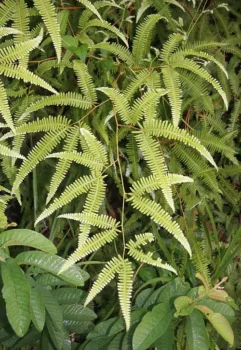
Comb Forkedfern: A Striking Native Fern for Tropical Gardens
If you’re looking to add some serious tropical flair to your garden, meet the comb forkedfern (Dicranopteris pectinata) – a stunning native fern that’s as functional as it is beautiful. This perennial powerhouse brings architectural drama to any landscape with its distinctive forked fronds and spreading growth habit.
What Makes Comb Forkedfern Special?
Also known by its scientific name Dicranopteris pectinata (formerly Gleichenia pectinata), this remarkable fern is a true native of Puerto Rico and the Caribbean region. Unlike many garden plants that hail from far-off places, comb forkedfern has deep roots in local ecosystems, making it a fantastic choice for gardeners who want to support native biodiversity.
As a perennial herb, this fern lacks the woody stems of shrubs and trees, but don’t let that fool you into thinking it’s delicate. This hardy plant has evolved to thrive in its native environment and can be a reliable, long-lasting addition to the right garden.
Where Does Comb Forkedfern Grow?
Comb forkedfern is naturally found throughout Puerto Rico, where it has adapted to a variety of local conditions. Its native status means it’s perfectly suited to the climate and soil conditions of the region.
- Species observed
- No observations
Garden Design Potential
What makes comb forkedfern particularly exciting for gardeners is its versatility. With its facultative wetland status, this adaptable fern can handle both moist and drier conditions, though it tends to prefer areas with consistent moisture. This flexibility makes it an excellent choice for:
- Tropical and subtropical landscape designs
- Naturalistic gardens that mimic native ecosystems
- Shaded areas where other plants might struggle
- Erosion control on slopes and hillsides
- Ground cover in established woodland gardens
The architectural quality of its forked fronds creates striking visual interest and adds a prehistoric, almost primordial feel to garden spaces. It’s perfect for gardeners who want to create that lush, jungle-like atmosphere.
Growing Conditions and Care
Comb forkedfern thrives in USDA hardiness zones 10-11, making it suitable only for truly tropical and subtropical climates. If you’re gardening in these warm zones, you’re in luck – this fern can be a relatively low-maintenance addition to your landscape.
Here’s what comb forkedfern needs to flourish:
- Light: Partial shade to full shade – think dappled sunlight filtering through tree canopy
- Soil: Well-draining but moisture-retentive soil rich in organic matter
- Water: Consistent moisture without waterlogging
- Humidity: High humidity levels (naturally present in tropical climates)
- Protection: Shelter from strong winds that could damage the delicate fronds
Planting and Care Tips
When planting comb forkedfern, choose a location that mimics its natural habitat. A spot under established trees or on the north side of structures often provides the right balance of light and protection. Amend your soil with plenty of organic matter like compost or leaf mold to create the rich, moisture-retentive environment this fern loves.
Maintenance is generally straightforward – keep the soil consistently moist (especially during dry periods), and remove any dead or damaged fronds to keep the plant looking its best. The spreading nature of this fern means it can serve as an excellent ground cover once established.
Wildlife and Ecosystem Benefits
As a native species, comb forkedfern plays an important role in local ecosystems. While it doesn’t produce flowers to attract pollinators (being a fern, it reproduces via spores), it provides habitat and food sources for various native insects and small wildlife. Its dense growth can offer shelter for small creatures and contribute to the overall biodiversity of your garden.
Is Comb Forkedfern Right for Your Garden?
If you’re gardening in zones 10-11 and looking for a native plant that brings tropical drama while supporting local ecosystems, comb forkedfern could be an excellent choice. Its adaptability to both wet and drier conditions, combined with its striking appearance and native status, makes it a winner for sustainable gardening.
However, if you’re outside its hardiness range, this tropical beauty won’t survive your winters. In that case, consider looking for native ferns in your own region that can provide similar aesthetic appeal and ecological benefits.
For Puerto Rican gardeners and those in similar tropical climates, comb forkedfern represents an opportunity to celebrate local plant heritage while creating stunning, sustainable landscapes that work with nature rather than against it.