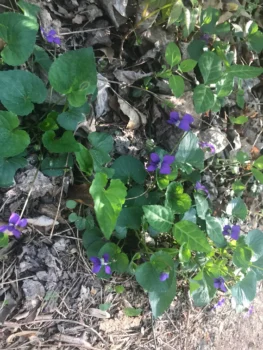
Common Blue Violet: A Charming Native Groundcover for Shade Gardens
Meet the common blue violet (Viola sororia), a delightful native wildflower that’s been quietly carpeting North American woodlands for centuries. This unassuming little plant might just be the perfect solution for those tricky shady spots in your garden where grass struggles to grow.
What Makes Common Blue Violet Special?
The common blue violet is a true North American native, naturally occurring across an impressive range that spans from Canada down through most of the lower 48 states. You’ll find this hardy little plant thriving everywhere from Alabama to Wisconsin, and from Maine to Texas. It’s also known by several botanical synonyms, including Viola papilionacea and Viola priceana, though Viola sororia is the accepted scientific name.
- Species observed
- No observations
This perennial forb (that’s garden-speak for a non-woody flowering plant) grows as a low, rhizomatous groundcover that spreads slowly but steadily. At just 0.3 feet tall, it forms charming colonies of heart-shaped green leaves topped with purple flowers in mid-spring.
Garden Appeal and Landscape Use
Common blue violet shines brightest in shade and woodland gardens where its modest height and spreading habit create a lovely living carpet. The heart-shaped foliage provides attractive texture throughout the growing season, while the conspicuous purple blooms add a splash of early spring color when many other plants are still waking up.
This plant works beautifully in:
- Naturalized woodland areas
- Shade gardens under trees
- Native plant gardens
- Pollinator-friendly landscapes
- Low-maintenance groundcover areas
Growing Conditions and Care
One of the best things about common blue violet is how accommodating it is. This plant adapts well to medium and fine-textured soils and can handle pH levels from 6.0 to 7.8. While it has low drought tolerance and prefers consistent moisture, it’s not overly fussy about specific conditions.
Ideal growing conditions include:
- Partial shade to intermediate shade tolerance
- Moist, well-draining soil
- USDA hardiness zones 3-9 (tolerates temperatures down to -28°F)
- Medium fertility requirements
- Consistent moisture (high moisture use)
Planting and Propagation
Common blue violet is routinely available from native plant suppliers and can be established through several methods. Seeds can be sown in spring, though germination may be slow. For quicker establishment, try cuttings or sprigs, which root readily.
The plant spreads naturally through its rhizomatous root system and self-seeding, with a moderate growth rate that won’t overwhelm your garden overnight. Seeds ripen from spring through summer, though they don’t persist long once mature.
Wildlife and Pollinator Benefits
This early-blooming native is a valuable addition to any pollinator garden. The purple flowers appear in mid-spring when hungry bees and butterflies are desperately seeking nectar sources after a long winter. As a native plant, it supports local ecosystems in ways that non-native alternatives simply can’t match.
The plant also has facultative wetland status across all regions, meaning it can adapt to both wetland and upland conditions – making it incredibly versatile for different garden situations.
Things to Consider
While common blue violet is generally well-behaved, it does spread through both underground rhizomes and self-seeding. In formal garden settings, you might need to manage its spread by removing unwanted seedlings. However, in naturalized areas, this spreading habit is often considered a feature, not a bug.
The plant has a relatively short lifespan for a perennial, but its ability to self-propagate means your violet patch should continue indefinitely with minimal intervention.
The Bottom Line
Common blue violet is an excellent choice for gardeners looking to add native beauty to shaded areas while supporting local wildlife. It’s low-maintenance, adaptable, and provides both spring color and season-long foliage interest. Just give it some shade, keep it reasonably moist, and this charming native will reward you with years of quiet beauty in your garden.
Whether you’re creating a woodland garden, establishing groundcover under mature trees, or simply wanting to support native pollinators, Viola sororia deserves serious consideration. Sometimes the most unassuming plants make the biggest impact – and the common blue violet is proof of that garden wisdom.