Common Blue Wood Aster: Your Garden’s Late-Season Pollinator Hero
When most flowers are calling it quits for the season, the Common Blue Wood Aster (Symphyotrichum cordifolium) is just getting started! This delightful native perennial brings a cloud of tiny blue-purple stars to your garden right when pollinators need it most. If you’re looking for a low-maintenance plant that works overtime for wildlife, this woodland beauty might just become your new favorite.
What Makes Common Blue Wood Aster Special?
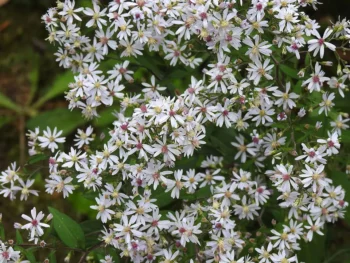
This charming native forb is like the reliable friend who shows up when everyone else has gone home. Standing up to 5 feet tall, it produces masses of small, light blue to purple flowers that create an almost ethereal, cloud-like effect in late summer and fall. The heart-shaped leaves (that’s where the cordifolium comes from – it means heart-leaved) provide attractive texture throughout the growing season.
As a true North American native, Common Blue Wood Aster has been supporting local ecosystems for millennia. It’s found naturally across an impressive range, thriving in states from Maine down to Florida and stretching west through the Great Plains, plus several Canadian provinces including British Columbia, Manitoba, New Brunswick, Nova Scotia, Ontario, Prince Edward Island, and Quebec.
- Species observed
- No observations
Why Your Garden (and Local Wildlife) Will Love It
Here’s where this plant really shines: it’s a late-season superstar for pollinators. While other flowers are fading, Common Blue Wood Aster provides crucial nectar when butterflies, bees, and other beneficial insects are desperately seeking fuel for winter preparation or migration. It’s like running a 24-hour diner for the pollinator community!
The plant spreads slowly by rhizomes, making it perfect for naturalizing in woodland settings without being aggressive. Its moderate growth rate means you won’t be constantly battling an overly enthusiastic spreader, but you will enjoy a gradually expanding colony over time.
Perfect Garden Situations
Common Blue Wood Aster is incredibly versatile, but it really excels in:
- Woodland gardens and shaded borders
- Native plant gardens and naturalized areas
- Rain gardens and areas with variable moisture
- Late-season pollinator gardens
- Low-maintenance landscape areas
This adaptable plant works beautifully as a backdrop for shorter woodland plants or as a mid-border filler that provides late-season interest when many perennials are winding down.
Growing Conditions and Care
One of the best things about Common Blue Wood Aster is its easy-going nature. Here’s what it prefers:
Light: Partial to full shade (it’s actually shade intolerant according to technical specs, but performs well in dappled woodland conditions)
Soil: Adaptable to coarse and medium-textured soils with a pH between 5.7 and 7.5. It’s quite drought tolerant once established and has low to moderate moisture needs.
Hardiness: Thrives in USDA zones 3-8, tolerating temperatures as low as -38°F
Space: Plant 2,700 to 11,000 plants per acre for restoration projects, or space individual plants about 2-3 feet apart in home gardens
Planting and Care Tips
Getting started with Common Blue Wood Aster is refreshingly straightforward:
- Plant in spring after the last frost, ensuring at least 90 frost-free days ahead
- Seeds can be direct sown or started from bare root plants
- With about 2 million seeds per pound, a little goes a long way if you’re starting from seed!
- Once established, this perennial requires minimal care
- It may self-seed slowly, so don’t be surprised to find new plants popping up nearby
- The plant has low seedling vigor, so be patient with young plants
- Mature plants can be divided every few years to manage spread or create new plantings
A Few Things to Keep in Mind
While Common Blue Wood Aster is generally wonderful, there are a few considerations:
The plant has a relatively short lifespan for a perennial, but it compensates by self-seeding and spreading via rhizomes. It’s not particularly fire-resistant, so if you’re in a fire-prone area, consider its placement carefully. The fall flowers are quite conspicuous (in a good way!), but the seeds aren’t particularly showy.
Commercial availability is currently limited to contracting only, which means you might need to seek out specialized native plant nurseries or participate in seed collection programs.
The Bottom Line
Common Blue Wood Aster is one of those plants that quietly does its job while providing outsized benefits to your local ecosystem. It’s not the flashiest plant in the garden, but its late-season blooms are absolutely crucial for pollinator survival. Plus, with its low maintenance requirements and adaptable nature, it’s perfect for gardeners who want maximum wildlife impact with minimal fuss.
If you’re looking to support native biodiversity while adding ethereal late-season beauty to your woodland or shaded areas, Common Blue Wood Aster deserves a spot on your must-have list. Your local butterflies and bees will definitely thank you!