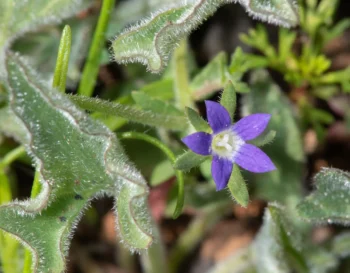
Common Bluecup: A Charming Native Annual for Western Gardens
If you’re looking to add a touch of delicate blue to your native plant garden, common bluecup (Githopsis specularioides) might just be the perfect little wildflower for you. This charming annual forb brings unexpected pops of color to naturalized spaces while supporting local wildlife in the process.
What is Common Bluecup?
Common bluecup is a native North American wildflower that belongs to the bellflower family. As an annual forb, it completes its entire life cycle in one growing season, producing those lovely cup-shaped blooms before setting seed for the next generation. Don’t let its delicate appearance fool you – this little plant is perfectly adapted to the sometimes harsh conditions of western landscapes.
You might also encounter this plant listed under its scientific synonyms, including Githopsis calycina, though Githopsis specularioides is the currently accepted name.
Where Does Common Bluecup Grow Naturally?
This native beauty calls the western regions of North America home, naturally occurring across British Columbia, California, Montana, Oregon, and Washington. Its range spans from Canada down through the lower 48 states, making it a true regional native for much of the western United States and southwestern Canada.
- Species observed
- No observations
Why Grow Common Bluecup in Your Garden?
There are several compelling reasons to consider adding common bluecup to your landscape:
- Native plant benefits: As a regional native, it supports local ecosystems and requires fewer resources than non-native alternatives
- Pollinator magnet: The small, nectar-rich flowers attract native bees, flies, and other beneficial insects
- Low maintenance: Once established, this annual largely takes care of itself
- Unique beauty: The cup-shaped blue flowers with white centers add distinctive charm to any native garden
- Self-seeding: In suitable conditions, it will reseed itself, creating natural drifts over time
What Does Common Bluecup Look Like?
Common bluecup produces small but eye-catching flowers that are typically 1/4 to 1/2 inch across. The blooms feature five delicate blue petals arranged in a cup shape, often with white or lighter centers that create a lovely contrast. These flowers typically appear in spring to early summer, depending on your location and local growing conditions.
As a forb, common bluecup is an herbaceous plant without woody stems, staying relatively low to the ground and fitting perfectly into naturalized garden settings.
Growing Conditions and Care
One of the best things about common bluecup is how adaptable it is to typical western growing conditions:
- Sunlight: Thrives in full sun to partial shade
- Soil: Prefers well-drained soils but tolerates poor soil conditions
- Water: Adapted to Mediterranean climate patterns with wet winters and dry summers
- Climate zones: Generally hardy in USDA zones 6-10, depending on your specific location within its native range
The plant’s wetland status is listed as Facultative Upland, which means it usually occurs in non-wetland areas but can occasionally be found in wetland conditions. This flexibility makes it quite adaptable to various garden situations.
Best Garden Settings for Common Bluecup
Common bluecup works wonderfully in several types of garden designs:
- Native plant gardens: Perfect for authentic regional plant communities
- Rock gardens: Its small size and drought tolerance make it ideal for rocky, well-drained sites
- Wildflower meadows: Adds delicate color to naturalized areas
- Low-water landscapes: Excellent choice for water-wise gardening
Planting and Propagation Tips
Growing common bluecup is refreshingly straightforward:
- Seeding: Direct seed in fall or early spring when soil temperatures are cool
- Establishment: Provide some water during germination, then reduce watering as plants establish
- Maintenance: Minimal care required once established – this plant is quite self-sufficient
- Natural reseeding: Allow some plants to go to seed for natural propagation in subsequent years
Is Common Bluecup Right for Your Garden?
Common bluecup is an excellent choice if you’re creating a native plant garden in its natural range, want to support local pollinators, or simply appreciate delicate wildflowers that don’t require a lot of fuss. It’s particularly well-suited for gardeners who prefer naturalized, informal landscapes over highly manicured spaces.
However, if you’re looking for bold, showy flowers or plants that bloom for extended periods, you might want to consider companion plants alongside common bluecup rather than relying on it as a primary focal point.
This charming native annual proves that sometimes the most understated plants can bring the greatest joy to both gardeners and the wildlife that depends on them. Give common bluecup a try in your native garden – you might just find yourself enchanted by its simple, honest beauty.