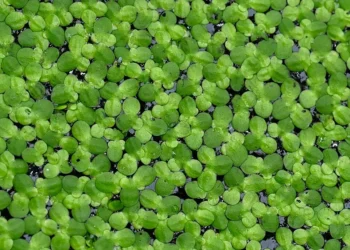
Common Duckmeat: The Tiny Native Aquatic Plant That Packs a Big Punch
If you’re looking to add some green coverage to your pond or water garden, meet common duckmeat (Spirodela polyrrhiza) – a delightfully small but mighty native aquatic plant that’s been quietly doing its job in North American waterways for centuries. Don’t let its diminutive size fool you; this little floater is a water garden superstar!
What Exactly Is Common Duckmeat?
Common duckmeat is a perennial aquatic forb that belongs to the duckweed family. Unlike its woody cousins on land, this herbaceous plant lacks any significant woody tissue and instead floats gracefully on the water’s surface. Each tiny plant consists of a small, round, thick green frond (technically called a thallus) with multiple roots dangling beneath like little aquatic tentacles.
You might also see this plant referenced by its botanical name Spirodela polyrrhiza, or its various synonyms including Lemna polyrrhiza. The polyrrhiza part of its name literally means many roots, which perfectly describes its distinctive multiple-root system that sets it apart from other duckweeds.
Where Does Common Duckmeat Call Home?
Here’s the exciting part for native plant enthusiasts – common duckmeat is native throughout North America! It naturally occurs across Canada, all of the lower 48 states, Hawaii, Puerto Rico, and the U.S. Virgin Islands. You can find it thriving from Alberta to Alabama, from British Columbia to the Caribbean, making it one of our most widely distributed native aquatic plants.
- Species observed
- No observations
Why Your Water Garden Needs Common Duckmeat
This unassuming little plant offers several compelling reasons to welcome it into your aquatic landscape:
- Natural water filter: Common duckmeat absorbs excess nutrients from water, helping prevent algae blooms and keeping your pond crystal clear
- Instant coverage: With a rapid vegetative spread rate, it quickly provides attractive surface coverage for bare water areas
- Wildlife habitat: Creates shelter and foraging opportunities for aquatic wildlife
- Low maintenance: Once established, it requires virtually no care
- Native authenticity: Supports local ecosystems and provides habitat for native wildlife
Perfect Water Gardens for Common Duckmeat
Common duckmeat thrives in various aquatic settings, making it incredibly versatile for different garden styles:
- Formal water gardens and ornamental ponds
- Natural wildlife ponds
- Rain gardens with seasonal standing water
- Bog gardens and wetland areas
- Natural swimming pools (in designated planting zones)
- Water features in native plant gardens
Growing Conditions That Make Common Duckmeat Happy
As an obligate wetland plant, common duckmeat has some specific requirements, but they’re refreshingly simple:
- Water depth: Prefers shallow to moderately deep water where it can float freely
- Sunlight: Intermediate shade tolerance, thriving in partial sun to partial shade
- Water pH: Adaptable to a wide range from 5.0 to 8.6
- Temperature: Hardy in USDA zones 3-11 (tolerates temperatures down to -38°F)
- Water movement: Prefers calm or slow-moving water
- Nutrients: Medium fertility requirements
Planting and Care Made Simple
One of common duckmeat’s greatest charms is how easy it is to establish and maintain:
Getting Started
- Simply place small clusters of plants directly on the water surface
- Best planted during spring when active growth begins
- No soil or planting containers needed – it’s truly plant and float
- Routinely available through aquatic plant suppliers
Ongoing Care
- Virtually maintenance-free once established
- May require occasional thinning in small ponds to prevent complete coverage
- Moderate growth rate keeps it manageable
- No fertilization needed – it gets nutrients directly from the water
A Few Things to Keep in Mind
While common duckmeat is generally well-behaved, there are a few considerations for water gardeners:
- In ideal conditions, it can spread rapidly and may need population management
- Complete surface coverage can reduce oxygen exchange, so maintain some open water areas
- Seeds have low abundance and slow spread rate, so vegetative propagation is primary
- Winter die-back is normal in colder climates – plants will return from overwintering buds
The Bottom Line on Common Duckmeat
Common duckmeat proves that great things come in small packages. This native aquatic gem offers water gardeners an easy, effective way to create natural-looking coverage while supporting local ecosystems. Whether you’re designing a formal water feature or creating a backyard wildlife habitat, common duckmeat delivers both beauty and function with minimal fuss.
For gardeners seeking authentic native plants that actually work in their landscapes, common duckmeat represents the perfect intersection of ecological value and garden practicality. Sometimes the best plants are the ones that have been quietly perfecting their craft in our waterways all along!