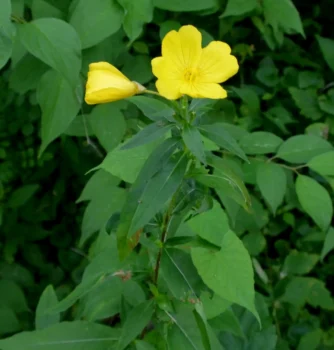
Common Evening Primrose: A Native Wildflower That Lights Up Your Garden After Dark
If you’ve ever wondered what plant produces those cheerful yellow flowers that seem to glow in the twilight, you’ve likely encountered the common evening primrose (Oenothera biennis). This delightful native wildflower brings a touch of magic to gardens with its unique habit of opening its fragrant blooms just as the sun sets.
What Makes Evening Primrose Special
Common evening primrose is a true North American native, naturally found throughout Canada and the lower 48 states. From Alberta to Florida, and from coast to coast, this adaptable plant has made itself at home in a remarkably wide range of environments. Its extensive natural distribution speaks to its resilience and adaptability – qualities that make it an excellent choice for gardeners seeking low-maintenance native plants.
- Species observed
- No observations
As a biennial, evening primrose follows a two-year life cycle that’s both predictable and rewarding. In its first year, it forms a rosette of coarse-textured green leaves close to the ground. The second year is when the magic happens – the plant sends up tall flowering spikes that can reach up to 5 feet in height, creating dramatic vertical interest in the garden.
Garden Appeal and Design Uses
Evening primrose shines in informal garden settings where its somewhat wild nature can be appreciated. It’s perfect for:
- Cottage gardens and wildflower meadows
- Prairie and naturalized landscapes
- Back-of-border plantings where its height adds structure
- Areas where you want to attract nighttime pollinators
The bright yellow flowers are particularly conspicuous and create a lovely evening display. While individual blooms last only one night, the plant produces flowers continuously throughout late spring, summer, and into fall, ensuring a long season of interest.
Wildlife and Pollinator Benefits
One of evening primrose’s greatest assets is its value to wildlife. The night-blooming flowers attract fascinating sphinx moths and other nocturnal pollinators that many gardeners never get to see. While it provides a modest food source for large animals and terrestrial birds (about 2-10% of their diet), its real value lies in supporting the often-overlooked nighttime ecosystem in your garden.
Growing Conditions and Hardiness
Evening primrose is refreshingly undemanding when it comes to growing conditions. It thrives in USDA hardiness zones 4-9 and adapts well to various soil types, from coarse sandy soils to fine clay. Here are its preferences:
- Soil: Tolerates poor soils; prefers pH between 5.0-7.0
- Moisture: Medium water needs with good drought tolerance once established
- Sun: Full sun (shade intolerant)
- Temperature: Hardy to -28°F
The plant has a Facultative Upland wetland status across all regions, meaning it usually grows in non-wetland areas but can tolerate occasional wet conditions – perfect for those tricky spots in your yard that are sometimes soggy.
Planting and Care Tips
Growing evening primrose couldn’t be simpler. The plant propagates readily by seed, with an impressive 1,376,000 seeds per pound! Here’s how to succeed:
- Planting: Direct sow seeds in spring or fall – no cold stratification required
- Germination: Seeds have high vigor and germinate easily
- Growth rate: Rapid once established
- Maintenance: Minimal care needed; drought tolerant with medium fertility requirements
- Self-seeding: Plants readily self-seed at a moderate rate, so deadhead if you want to control spread
Be aware that evening primrose can be enthusiastic about spreading via seed. While this makes it excellent for naturalizing large areas, you may want to remove spent flower heads if you prefer a more controlled garden appearance.
Potential Drawbacks to Consider
While evening primrose has many virtues, it’s not the right plant for every situation:
- It has low fire tolerance, so avoid planting in fire-prone areas
- The coarse foliage texture may not suit formal garden designs
- It can self-seed readily, potentially becoming weedy in small, manicured spaces
- Commercial availability is limited to contracting only, so you may need to grow from seed
Is Evening Primrose Right for Your Garden?
Common evening primrose is an excellent choice for gardeners who want to support native biodiversity while enjoying a unique and beautiful flowering plant. Its evening-blooming habit makes it perfect for those who spend time in their gardens after work, and its native status means you’re supporting local ecosystems.
Consider planting evening primrose if you have a casual garden style, enjoy night-blooming plants, want to support native pollinators, or need a tough, drought-tolerant plant for challenging sites. Just be prepared for its enthusiastic self-seeding – which, depending on your perspective, is either a delightful bonus or something to manage!
With its glowing yellow blooms, sweet evening fragrance, and important ecological role, common evening primrose proves that some of the best garden plants are those that have been quietly thriving in North America for thousands of years.