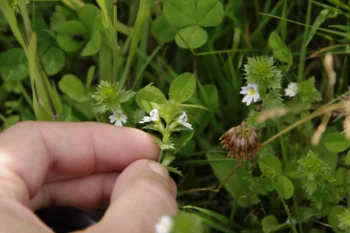
Common Eyebright: A Delicate Wildflower for Cool Climate Gardens
Meet common eyebright (Euphrasia nemorosa), a charming little annual that might just be the perfect addition to your woodland or naturalized garden. This delicate forb brings a touch of wild beauty with its tiny white flowers marked with purple streaks, creating a subtle yet captivating display that many gardeners overlook.
What Exactly Is Common Eyebright?
Common eyebright is a small annual forb that typically grows between 4 to 12 inches tall. As a member of the eyebright family, it produces small, intricate flowers that are predominantly white with distinctive purple markings. The plant has a delicate, almost ethereal appearance that adds texture and interest to garden spaces without overwhelming other plantings.
You might also encounter this plant under several botanical synonyms, including Euphrasia americana, Euphrasia borealis, or Euphrasia curta, though Euphrasia nemorosa is the currently accepted name.
Where Does It Grow Naturally?
Common eyebright has an interesting native status story. It’s considered native to Canada and parts of the northern United States, while also being introduced in some regions like Alaska where it has naturalized successfully. You’ll find it growing naturally across a wide range of northern territories and states, including:
- Canadian provinces: Alberta, British Columbia, New Brunswick, Nova Scotia, Ontario, Prince Edward Island, Quebec, Labrador, and Newfoundland
- U.S. states: Alaska, Connecticut, Maine, Massachusetts, Michigan, Minnesota, New Hampshire, Vermont, and Washington
- St. Pierre and Miquelon
- Species observed
- No observations
Why Consider Growing Common Eyebright?
This little wildflower offers several compelling reasons to include it in your garden:
- Pollinator magnet: The small flowers attract bees, flies, and other beneficial insects
- Low maintenance: As an annual, it requires minimal care once established
- Natural appearance: Perfect for creating authentic wildflower meadows or naturalized areas
- Cool climate specialist: Thrives in northern gardens where many other flowers struggle
- Unique texture: Adds delicate, fine-textured interest to garden compositions
Best Garden Settings for Common Eyebright
Common eyebright works beautifully in several garden styles:
- Woodland gardens: Naturalizes well under partial shade
- Wildflower meadows: Blends seamlessly with native grasses and other wildflowers
- Rock gardens: Its small stature makes it perfect for alpine-style plantings
- Naturalized areas: Excellent for low-maintenance, natural-looking spaces
Growing Conditions and Care
Common eyebright is refreshingly easy to grow if you can provide the right conditions:
- Light: Partial shade to dappled sunlight
- Soil: Moist, well-draining soil with good organic content
- Climate: Thrives in cool climates, USDA zones 2-6
- Water: Consistent moisture, but not waterlogged conditions
Planting and Propagation Tips
Getting common eyebright established in your garden is straightforward:
- Timing: Direct seed in fall for spring germination
- Seeding: Scatter seeds on prepared soil surface and lightly rake in
- Spacing: Allow natural spacing as seeds germinate and establish
- Maintenance: Minimal care required once established – just ensure adequate moisture
Wildlife and Ecosystem Benefits
Beyond its garden appeal, common eyebright supports local ecosystems by providing nectar and pollen for small pollinators. The plant’s flowers are particularly attractive to native bees and beneficial flies, making it a valuable addition to any pollinator-friendly garden.
Is Common Eyebright Right for Your Garden?
Common eyebright is an excellent choice if you’re looking to create a naturalized garden space, live in a cooler climate, and appreciate subtle beauty over flashy displays. It’s particularly well-suited for gardeners who want to support local pollinators while maintaining a low-maintenance landscape.
However, if you’re seeking bold, showy flowers or live in a hot climate, you might want to consider other options. This plant definitely favors cooler temperatures and may struggle in southern or desert regions.
Whether you’re creating a woodland sanctuary or adding authentic touches to a wildflower meadow, common eyebright offers a delightful way to bring a bit of northern wilderness charm to your garden space.