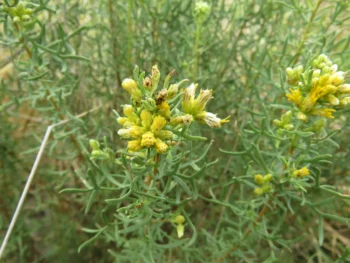
Common Goldenbush: A Compact Native Treasure for Texas Gardens
If you’re looking for a low-maintenance native plant that packs a punch in the fall garden, meet common goldenbush (Isocoma coronopifolia). This unassuming little shrub might not win any height contests, but what it lacks in stature, it makes up for in charm and ecological value.
What is Common Goldenbush?
Common goldenbush is a perennial native shrub that’s perfectly sized for smaller spaces. This compact beauty typically stays under 1.5 feet tall, though it can occasionally reach up to 3 feet at maturity. Don’t let its modest size fool you – this plant is a workhorse in the native garden, offering year-round structure and spectacular fall color.
You might also encounter this plant listed under its botanical synonyms, including Isocoma pedicellata, but regardless of what name you see on the plant tag, you’re getting the same reliable performer.
Where Does Common Goldenbush Call Home?
This Texas native is naturally found throughout the Lone Star State, where it has adapted to thrive in the region’s challenging climate conditions. As a plant native to the lower 48 states, it’s perfectly suited to work with local ecosystems rather than against them.
- Species observed
- No observations
Why Plant Common Goldenbush in Your Garden?
There are plenty of reasons to fall in love with this native gem:
- Perfect size: Its compact growth habit makes it ideal for small gardens, rock gardens, and tight spaces
- Low maintenance: Once established, it’s incredibly drought-tolerant and requires minimal care
- Fall spectacular: Produces masses of bright yellow, daisy-like flowers when many other plants are winding down
- Pollinator magnet: Fall blooms provide crucial nectar for butterflies, bees, and other pollinators preparing for winter
- Native credentials: Supports local ecosystems and wildlife
Where Does Common Goldenbush Shine in the Landscape?
This versatile little shrub fits beautifully into several garden styles:
- Xeriscaping: Its drought tolerance makes it perfect for water-wise gardens
- Rock gardens: The compact size and tough nature suit rocky, well-drained sites
- Native plant gardens: An authentic choice for Texas native landscapes
- Wildlife gardens: Provides important fall nectar sources for pollinators
- Border fronts: Low height makes it ideal for the front of mixed borders
Growing Common Goldenbush Successfully
The beauty of common goldenbush lies in its simplicity. This plant thrives in USDA hardiness zones 8b through 10a, making it well-suited to most of Texas and similar climates.
Ideal Growing Conditions
- Sunlight: Full sun for best flowering and compact growth
- Soil: Well-drained soils; avoid areas that stay wet
- Water: Drought-tolerant once established; minimal supplemental watering needed
- Spacing: Allow 2-3 feet between plants for good air circulation
Planting and Care Tips
Getting your common goldenbush off to a good start is straightforward:
- Plant in fall or early spring when temperatures are moderate
- Water regularly during the first growing season to establish roots
- Once established, water only during extended dry periods
- Prune lightly after flowering to maintain shape, but avoid heavy pruning
- No fertilizer needed – this plant prefers lean soils
Is Common Goldenbush Right for Your Garden?
Common goldenbush is an excellent choice for gardeners who want:
- A reliable, low-maintenance native plant
- Fall color and pollinator support
- A compact shrub for smaller spaces
- Drought-tolerant landscaping options
- To support local ecosystems with native plants
While we don’t have complete information about its wildlife benefits beyond pollinator support, most native plants provide multiple ecosystem services, from shelter for beneficial insects to seeds for birds.
The Bottom Line
Common goldenbush proves that good things come in small packages. This Texas native offers gardeners a perfect combination of low maintenance, seasonal interest, and ecological value. Whether you’re creating a drought-tolerant landscape, supporting pollinators, or simply want a reliable native plant that won’t take over your garden, common goldenbush deserves a spot in your landscape palette.
Sometimes the most rewarding plants are the ones that ask for very little while giving back so much – and common goldenbush fits that description perfectly.