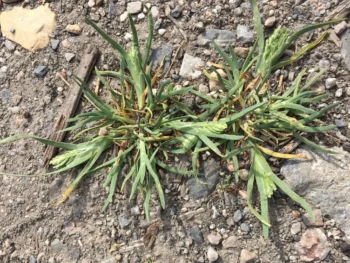
Common Hardgrass: The Unassuming Annual You’ve Probably Already Met
If you’ve ever wondered about those small, tough-looking grasses sprouting up in sidewalk cracks, parking lots, or along roadsides, you might have encountered common hardgrass (Sclerochloa dura). This scrappy little annual has a knack for showing up in the most unlikely places, earning its hard reputation through sheer persistence rather than size or showiness.
What Exactly Is Common Hardgrass?
Common hardgrass is a small annual grass that belongs to the graminoid family. Also known by its synonym Cynosurus durus, this unassuming plant completes its entire life cycle in just one growing season. Don’t expect towering prairie grass vibes here – common hardgrass is more of a pocket-sized pioneer that specializes in making itself at home in disturbed soils and challenging growing conditions.
Where You’ll Find It
Originally hailing from Europe and western Asia, common hardgrass has become quite the world traveler. In North America, it’s native to Canada but has naturalized throughout much of the United States. You can spot it across an impressive range of states, from British Columbia and Arizona to New York and Georgia, with established populations in over 30 states and provinces.
- Species observed
- No observations
Should You Plant Common Hardgrass in Your Garden?
Here’s where things get interesting. While common hardgrass isn’t invasive or harmful, it’s also not exactly what you’d call a garden showstopper. This grass is more of an accidental resident than an intentional landscape choice. It’s perfectly content growing in compacted soils, dry conditions, and areas where other plants struggle – which explains why it’s often found in urban environments rather than carefully curated gardens.
If you’re looking to add native grasses to your landscape, you might want to consider indigenous alternatives that provide better wildlife value and aesthetic appeal. Native bunch grasses or prairie species will give you more bang for your gardening buck while supporting local ecosystems.
Growing Conditions and Care
Should you decide to work with common hardgrass (or if it decides to work with you), here’s what you need to know:
- Soil: Extremely adaptable – thrives in poor, compacted, or disturbed soils
- Water: Drought tolerant once established
- Sun: Prefers full sun but tolerates partial shade
- Climate: Hardy across USDA zones 3-9
- Maintenance: Essentially none – it’s a survivor, not a diva
The Role of Common Hardgrass
While it may not win any beauty contests, common hardgrass does serve some practical purposes. It can help stabilize soil in disturbed areas and provides ground cover where other plants might struggle. As a wind-pollinated grass, it doesn’t offer much for pollinators directly, but it can contribute to the overall plant diversity in challenging environments.
The Bottom Line
Common hardgrass is one of those plants that’s more likely to find you than the other way around. It’s not particularly ornamental, but it’s not problematic either – just a tough little grass making the most of whatever growing conditions come its way. If you’re planning a native garden or looking for plants with strong ecological value, there are probably better options to consider. But if you spot some common hardgrass making itself at home in your garden’s forgotten corners, you can appreciate it for what it is: a resilient reminder that life finds a way, even in the most unlikely places.
Whether you embrace it or replace it with native alternatives is entirely up to you – this adaptable annual will probably be just fine either way.