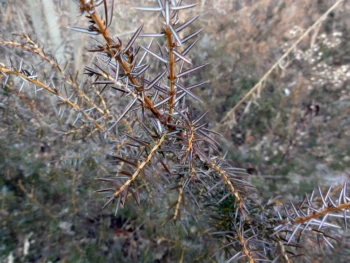
Common Juniper: A Hardy Native Groundcover for Challenging Sites
If you’re looking for a tough, low-maintenance evergreen that can handle whatever Mother Nature throws at it, meet the common juniper (Juniperus communis var. depressa). This resilient native shrub might just be the unsung hero your landscape has been waiting for.
What Makes Common Juniper Special?
Common juniper is a perennial shrub that stays close to the ground, rarely growing taller than 4-5 feet. What it lacks in height, it makes up for in character and durability. This spreading evergreen creates dense mats of blue-green, needle-like foliage that looks great year-round. In fall, female plants produce small, berry-like cones that start green and ripen to an attractive blue color.
You might also see this plant referred to by its botanical synonyms, including Juniperus canadensis or Juniperus depressa, but don’t let the scientific names intimidate you – it’s still the same hardy performer.
Where Does It Call Home?
This is one widely traveled native! Common juniper has an impressive natural range that spans from Alaska down to the lower 48 states, across Canada, and even reaches St. Pierre and Miquelon. You’ll find it growing naturally in states from Alabama to Wyoming, and provinces from Alberta to Newfoundland. Talk about a true North American native!
- Species observed
- No observations
A Word About Rarity
While common juniper has a broad natural range, it’s worth noting that in New Jersey, this variety has a rarity status of S1 (Highlands Listed), meaning it’s quite rare in that state. If you’re gardening in New Jersey and want to include this native, make sure you source your plants from reputable nurseries that propagate responsibly rather than wild-collect.
Why Your Garden Will Love Common Juniper
This little powerhouse brings several benefits to your landscape:
- Ultimate low maintenance: Once established, it practically takes care of itself
- Year-round interest: Evergreen foliage provides structure even in winter
- Erosion control: Perfect for slopes and challenging sites
- Wildlife friendly: Birds love the berries, and the dense foliage provides shelter
- Versatile design element: Works in rock gardens, as groundcover, or foundation plantings
Where Does Common Juniper Shine?
This adaptable native is perfect for:
- Rock gardens and alpine settings
- Xeriscapes and drought-tolerant landscapes
- Coastal gardens (it tolerates salt spray)
- Naturalistic and wildlife gardens
- Areas where you need reliable groundcover
- Foundation plantings that won’t outgrow their space
Growing Common Juniper Successfully
Hardiness: This tough customer thrives in USDA zones 2-6, making it perfect for northern gardens and challenging climates.
Light requirements: Give it full sun to partial shade, though it performs best with plenty of sunshine.
Soil needs: Well-draining soil is key – common juniper hates wet feet. It adapts to various soil types but prefers acidic to neutral pH. Rocky, sandy, or gravelly soils are just fine.
Water requirements: Drought tolerant once established, but provide regular water the first year to help roots get established.
Planting and Care Tips
When to plant: Spring or early fall gives your juniper the best start.
Spacing: Plant 3-6 feet apart depending on how quickly you want coverage.
Care routine: Here’s the best part – there’s barely any routine needed! Water regularly the first year, then step back and let it do its thing. Light pruning in late winter can help shape it if needed, but it’s rarely necessary.
Potential issues: Watch for spider mites in hot, dry conditions, and ensure good air circulation to prevent fungal issues.
The Bottom Line
Common juniper might not be the flashiest plant in the nursery, but it’s definitely one of the most reliable. If you’re dealing with challenging growing conditions, want a native plant that supports local wildlife, or simply need something that won’t require weekend after weekend of maintenance, this hardy groundcover deserves a spot in your landscape. Just remember to source responsibly, especially if you’re gardening in areas where it’s considered rare.
Sometimes the best garden additions are the ones that quietly do their job while asking for almost nothing in return – and common juniper fits that description perfectly.