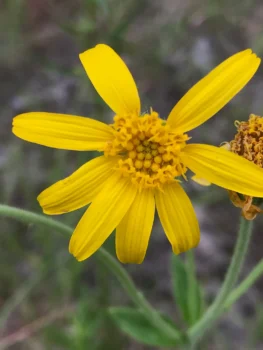
Common Leopardbane: A Hidden Gem for Southeastern Shade Gardens
If you’re looking for an early spring showstopper that’s truly native to the Southeast, let me introduce you to common leopardbane (Arnica acaulis). This charming little wildflower might not be the flashiest plant in the garden center, but it’s got personality in spades and plays a crucial role in supporting our local ecosystems.
What Exactly Is Common Leopardbane?
Common leopardbane is a perennial forb – basically a non-woody plant that comes back year after year. Don’t let the intimidating botanical name fool you; this is a pretty straightforward plant to understand. It grows as a low rosette of leaves with bright yellow, daisy-like flowers that pop up in early spring, often when most other plants are still snoozing.
You might occasionally see this plant referred to by its synonym, Doronicum acaule, but common leopardbane is the name that’s stuck in most gardening circles.
Where Does It Call Home?
This native beauty has quite an impressive range across the southeastern United States. You’ll find it naturally growing in Alabama, Delaware, District of Columbia, Florida, Georgia, Maryland, New Jersey, North Carolina, Pennsylvania, South Carolina, and Virginia. It’s perfectly adapted to the climate and conditions of the lower 48 states.
- Species observed
- No observations
Important Conservation Note
Here’s something crucial to know: In New Jersey, common leopardbane has a rarity status of Highlands Listed, SX.1, which means it’s quite rare in that region. If you’re planning to add this plant to your garden, please make sure you’re sourcing it responsibly from reputable native plant nurseries rather than wild-collecting. We want to protect the wild populations while still enjoying this beauty in our gardens!
Why Your Garden (and Local Wildlife) Will Love It
Common leopardbane is like that friend who shows up early to the party with snacks – it blooms when most other flowers are still getting ready, providing crucial nectar for early-season pollinators. Native bees and butterflies absolutely adore those cheerful yellow blooms, and you’ll often spot them buzzing around the flowers on warm spring days.
From a design perspective, this plant is perfect for:
- Woodland gardens where you need reliable early color
- Shade gardens that could use a spring pick-me-up
- Native plant gardens focused on supporting local wildlife
- Areas where you want low-maintenance groundcover
Getting the Growing Conditions Right
Here’s where common leopardbane gets a bit particular about its preferences. This plant has different moisture needs depending on where you live:
- Atlantic and Gulf Coastal Plain: It’s an Obligate Upland plant here, meaning it almost never occurs in wetlands and prefers well-draining conditions
- Eastern Mountains and Piedmont: It’s more flexible as a Facultative Upland plant, usually preferring non-wetlands but occasionally tolerating wetter spots
Generally speaking, common leopardbane thrives in:
- Partial to full shade (think woodland conditions)
- Moist but well-draining soil
- Rich, organic soil with plenty of leaf litter
- USDA hardiness zones 5-9
Planting and Care Tips
The good news? Once you get common leopardbane established, it’s pretty low-maintenance. Here’s how to set it up for success:
- When to plant: Fall or early spring work best
- Soil prep: Work in some compost or leaf mold to mimic its natural woodland habitat
- Spacing: Give plants room to form their natural rosettes
- Watering: Keep consistently moist but not soggy, especially during establishment
- Summer dormancy: Don’t panic if it goes quiet during hot summer months – this is totally normal
The Bottom Line
Common leopardbane might not be the showiest plant in your garden, but it’s exactly the kind of reliable, wildlife-supporting native that makes a real difference in our local ecosystems. If you can provide the right shade and moisture conditions, and you source your plants responsibly, you’ll be rewarded with early spring blooms and the satisfaction of supporting native pollinators when they need it most.
Just remember – with its rarity status in some areas, this is a plant worth treating with extra care and respect. Choose your sources wisely, and you’ll have a wonderful addition to your native plant collection that truly belongs in your corner of the Southeast.